
Start A friend of mine used to work a 9-to-5 HR job. Decent salary, boring work, no flexibility. One day she got fed up and started offering resume writing on Fiverr but with a twist. She used AI to speed up her process dramatically.
Six months later she was making more than her old salary. Working from home. Choosing her own hours.
She wasn't a tech person. She still isn't. She just figured out one thing and ran with it.
That's what this article is actually about. Not theory. Not hype. Just what's working right now for real people trying to earn from AI in 2026.
Table of Contents
Why Right Now Actually Matters
AI Freelancing
Content That Pays You Later
Teaching What You Know
AI Consulting
Micro-SaaS
Digital Products
Affiliate Marketing With AI
Get Paid to Train AI
Conclusion + FAQs + Author Bio
1. Why Right Now Actually Matters for AI Income Ideas
Most people treat AI like a news story interesting to read about, nothing to do with their life. That's a mistake they'll regret in two years.
Right now there's a gap. Businesses know they need AI but have no idea how to use it. People who can bridge that gap even partially are getting paid well to do it. That gap won't stay open forever.
The tools are genuinely accessible now. You don't need to understand how AI works under the hood. You just need to know how to use it well enough to solve someone's problem. That's a learnable thing. Most people can get there in a few weeks.How to Make Money With AI
💡 The advantage right now isn't expertise it's just being willing to figure it out before everyone else does.
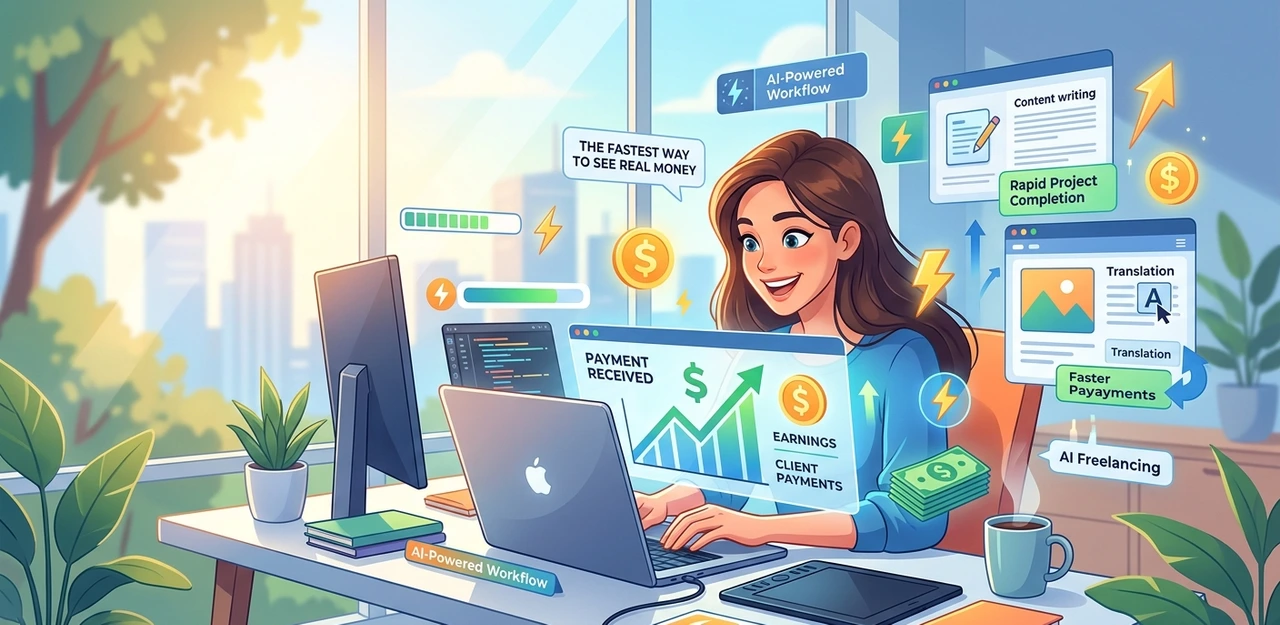
2. AI Freelancing: The Fastest Way to See Real Money
Freelancing is where most people should start. Not because it's the most glamorous option — it isn't. But because you get paid fast, you learn fast, and you find out quickly what people actually want.
The real edge AI gives freelancers is speed. Work that used to take a full day now takes two or three hours. You can take on more clients, hit deadlines easily, and spend the extra time on marketing or just living your life.
Services that are genuinely selling right now: writing content for businesses, setting up basic chatbots for shops and service providers, creating social media posts in bulk, and writing product descriptions for online stores. None of these require a degree or technical background. They require knowing which AI tool to use and how to clean up its output.
Don't overthink the start. Pick one service. Make a few samples. Put up a profile. Send personalized messages to ten potential clients every single day until someone says yes.
💡 Speed is the freelancer's real product AI just gives you more of it.
3. Content That Pays You Later
Building a blog, YouTube channel, or newsletter is a slow burn. Let's be honest about that upfront. For the first six to nine months, you'll be putting in work and seeing almost nothing back.
But here's why it's worth considering the income eventually becomes disconnected from your time. A blog post written today can bring in money two years from now. That's not possible with most other work.
AI helps you produce content faster. Research, outlines, first drafts all of it moves quicker. But the part that actually makes content rank and earn is still human. Your opinion. Your experience. Your specific angle on a topic. AI can't fake that convincingly enough to build an audience.
Pick a topic where people spend money. Software, personal finance, health, career skills. Write things that genuinely help someone solve a problem. Do that for a year and see where you stand.
💡 Content income is slow, then suddenly it isn't most people quit right before it turns.
4. Teaching What You Know
You probably know something useful that other people would pay to learn. AI turns that knowledge into a course or coaching program dramatically faster than before.
Dump your notes, ideas, or existing content into an AI tool. Ask it to structure a course. Get a framework back in minutes instead of spending weeks staring at a blank page. Then record short lessons. Sell them on Gumroad or Udemy. Done.
The courses that actually sell aren't the broad ones. "AI for Beginners" is crowded and hard to stand out in. "AI Tools for Physiotherapists" or "Using ChatGPT to Run Your Cleaning Business" — that's where people pay without hesitation because it feels made exactly for them.
Earnings vary wildly. Some niche courses earn a few hundred dollars a month. Others hit five figures. The difference is usually how specific the topic is and how well the creator marketed it.
💡 The narrower your audience, the easier it is to reach them and the more they trust you.
5. The AI Consulting Play
Small business owners are stuck. They keep hearing about AI, they know they should be doing something with it, but they open ChatGPT and have no idea what to actually type.
That confusion is a legitimate business opportunity.
You don't need to be an AI expert to consult. You need to be one step ahead of the person you're helping — which after a few weeks of real practice, you will be. Show a restaurant owner how to use AI to write their weekly specials post. Show a dentist how to draft patient follow-up emails in seconds. These aren't complicated things. They just feel complicated to people who've never tried.
Charge a flat fee for a half-day session. Get specific about who you serve "I help law firms use AI to cut admin time" lands so much better than "I help businesses with AI." The more specific you are, the more credible you sound without needing credentials.
💡 People don't pay for AI knowledge they pay for someone to make it work inside their actual business.
6. Build a Micro-SaaS Without Coding
Micro-SaaS just means a small software product that solves one problem and charges monthly. In 2026 you can build one without writing a single line of code using tools like Bubble or Glide.
Keep the idea painfully small. Not "an AI platform for businesses." Something like a tool that writes job descriptions for HR managers. Or a bot that answers common questions for gym owners. One problem. One type of customer.
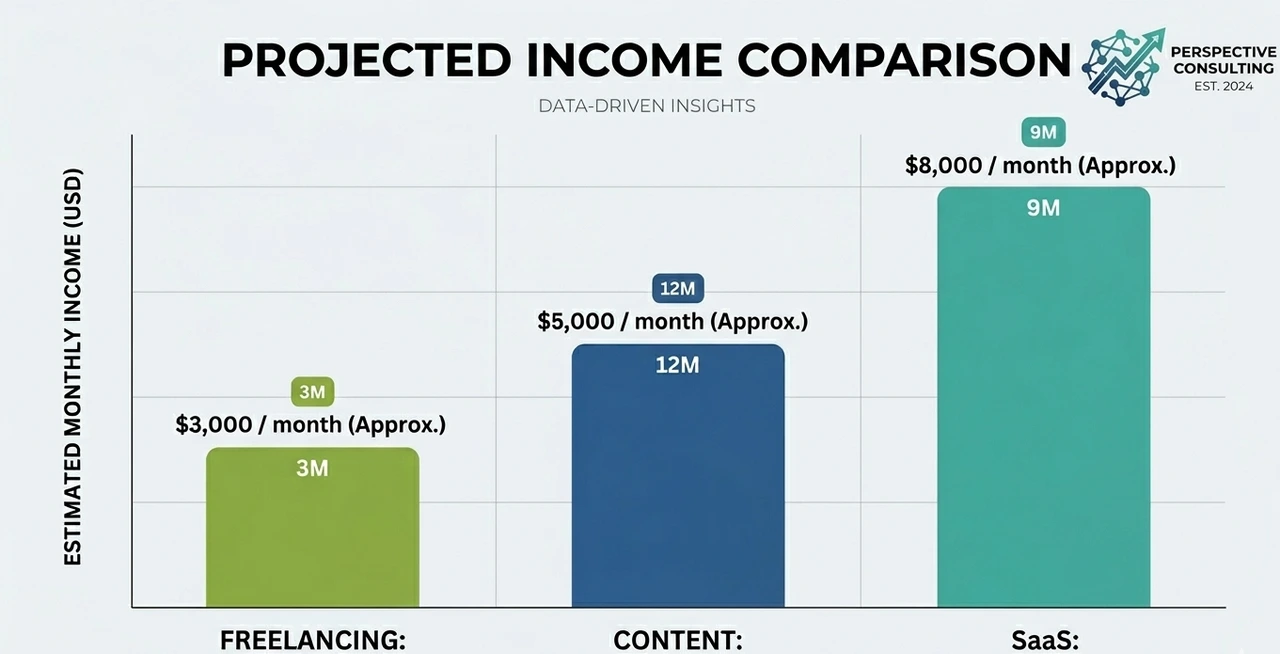
Charge somewhere between $20 and $50 a month. Get 80 to 100 paying customers and you have a real income stream. Getting there takes six to twelve months of consistent work and honest marketing.
The failure rate here is worth saying clearly. Most micro-SaaS products don't make it because they solve a problem nobody actually pays money to fix. Before building, talk to real potential customers. If ten people say "I'd pay for that," then build it.
💡 Validate before you build — two weeks of conversations saves six months of wasted work.
7. Sell Digital Products Made With AI
Digital products are clean. No inventory. No shipping. No customer support nightmare. You make something once and sell it as many times as you want.
What people are actually buying: prompt packs that help them use AI better, Notion templates for productivity, social media content bundles for small businesses, and digital art prints for home decor. Etsy and Gumroad are the two best places to sell these right now.Free AI Tools Guide
A well-set-up Etsy shop with strong product photos and decent SEO in the listing titles can bring in a few hundred to a couple thousand dollars a month. It's not guaranteed, but it's achievable for someone willing to treat it like a real business rather than a passive income fantasy.
The work happens upfront. Creating good products, writing listings that actually show up in search, getting your first handful of reviews that takes a solid month or two of focused effort.
💡 Ten good products beats fifty mediocre ones every time.
8. Affiliate Marketing Powered by AI
Affiliate marketing is recommending products and getting a cut when someone buys through your link. AI makes it faster to produce the content that drives those recommendations — but the strategy still has to be yours.
What actually converts: detailed comparison articles, honest reviews, and "best X for Y type of person" content. People buying software, financial products, or online courses are already looking for someone to help them decide. Be that person.
AI helps you research, outline, and draft. You make the judgment calls on what's actually worth recommending and add your honest take. Readers who feel like they're getting a genuine opinion buy through your links. Readers who feel like they're being sold to click away.
Timeline: twelve to twenty-four months before this becomes meaningful income. The sites that earn $3,000 to $8,000 a month from affiliate commissions didn't get there in ninety days. They got there because someone kept going when it felt pointless.
💡 Recommend things you'd genuinely tell a friend to buy that's the whole strategy.
9. Get Paid to Train AI
This surprises most people. AI companies actually pay humans to help make their models better by writing prompts, rating responses, and flagging mistakes.
Companies like Scale AI, Outlier, and Data Annotation hire for this work regularly. Pay sits between $15 and $50 an hour depending on what the task involves and what your background is. If you're a writer, lawyer, doctor, or engineer, you'll get access to higher-paying specialized tasks.
It's fully remote. The hours are flexible. And the application process is straightforward, usually a short test to check your judgment and attention to detail.
This isn't a path to wealth. But it's one of the lowest-barrier ways to start making real money from AI right now, while you're building something else on the side. And working inside these systems teaches you more about AI than any YouTube video will.
💡 Most people overlook this because it sounds unglamorous which means less competition for you.

Conclusion: One Step, Not Nine
Reading this list and trying to do everything on it at once is a trap. Pick one thing — the one that fits closest to what you already know or already do — and focus on that for ninety days.
The people earning real money from AI income ideas in 2026 are not special. They're just the ones who stopped reading and started doing. Most people never make that move.
Freelancing can get you to $1,000 to $4,000 a month within three to six months if you're consistent. Content and passive income paths take a year or more before real numbers appear. Nobody can guarantee specific results — but the potential is real for people who treat it seriously.
No. Most of what's on this list requires zero coding and zero technical knowledge. Curiosity and a willingness to learn tools is genuinely enough to start. The micro-SaaS path is the only one where technical help becomes useful and even there, no-code tools have made it accessible.
Freelancing. It gives you the fastest feedback, requires the least upfront investment, and teaches you what the market actually values. Start there, earn your first money, then decide if you want to expand into something else.
Generic, unedited AI content that adds nothing useful yes. Content where a human has added real experience, edited carefully, and brought a genuine perspective no. The standard hasn't changed: helpful content wins. Lazy content loses.
Honestly, plan for twelve to eighteen months minimum before AI income replaces a full-time salary. It can happen faster with freelancing, slower with content. Anyone telling you six weeks is selling a course, not giving advice.
Yes. Freelancing, digital products, and affiliate marketing are completely location-independent. Payoneer and Wise both work reliably for receiving international payments. The income also goes further in Pakistan than it would in the US or UK — which is actually a real advantage.