Let's Be Honest First: Can You Actually Rank Without Backlinks?
Two camps exist online.
One says: "Without backlinks, you're dead in the water."
The other says: "Backlinks are irrelevant in 2026."
Both are wrong. Both are partially right.
Here's the truth:
Backlinks are a ranking factor. They are not the ranking formula.
A real experiment run by the r/seogrowth community in 2026 proved that multiple blog posts can reach page 1 on Google with zero backlinks — purely through content strategy. But it's equally true that in highly competitive niches, backlinks still carry serious weight.
So the real question isn't "do backlinks matter?" — it's: "In my niche, with my resources, what can I actually do?"
This guide answers exactly that.
How Google Actually Works in 2026 (Understand This, Everything Else Becomes Easy)
Google is now an AI-driven search engine. It doesn't just count links anymore — it understands content.
Here's how the ranking signals have shifted:
Signal | Importance in 2020 | Importance in 2026 |
|---|---|---|
Backlinks | ⭐⭐⭐⭐⭐ | ⭐⭐⭐ |
Topical Authority | ⭐⭐ | ⭐⭐⭐⭐⭐ |
Search Intent Match | ⭐⭐⭐ | ⭐⭐⭐⭐⭐ |
User Engagement Signals | ⭐⭐ | ⭐⭐⭐⭐ |
Content Freshness | ⭐⭐ | ⭐⭐⭐⭐ |
AI Overview Optimization | ❌ | ⭐⭐⭐⭐⭐ |
Entity & Semantic SEO | ⭐ | ⭐⭐⭐⭐ |
The bottom line: If your content is genuinely the best answer to a specific question, Google can and will rank it — even without a single backlink pointing to it.
Strategy 1: Micro-Niche Selection Become the Biggest Fish in a Smaller Pond
This is the single most important and most ignored step in no-backlink SEO.

If you start a general "SEO blog," you're competing with Ahrefs, Moz, and Semrush. Those sites have hundreds of thousands of backlinks built over decades. You can't win that fight.
But if you build "Local SEO for small businesses in emerging markets" — your competition shrinks dramatically.
The Micro-Niche Formula:
[Broad Topic] + [Specific Audience] + [Specific Problem] = Winning Micro-Niche
Real Examples:
Broad Topic | Winning Micro-Niche |
|---|---|
SEO | "SEO for AI-generated blogs in 2026" |
Fitness | "Home workouts for office workers with no equipment" |
Finance | "Freelancer tax guide for remote developers" |
Food | "Budget meal prep for college students under $5" |
Marketing | "Email marketing for handmade Etsy sellers" |
Why Micro-Niches Win Without Backlinks:
Near-zero competition — ranking doesn't require authority you haven't built yet
Topical authority forms faster — 20-30 articles can make you the go-to source
Higher engagement — specific audiences are more invested readers
Easier keyword clusters — you can own entire topic trees
Practical tip: Search your topic on Google and study the "People Also Ask" box. Every question there is a potential micro-niche seed.
Strategy 2: Search Intent Matching Get This Wrong and Nothing Else Matters
Search intent is the actual goal behind a search query and it's the single biggest factor Google uses to evaluate whether your content deserves to rank.
You can have the most beautifully written, technically optimized article in the world. If it doesn't match what the user is actually looking for, Google will not rank it.
The 4 Types of Search Intent:
1. Informational — The user wants to learn something
Example: "what are backlinks"
Needs: Clear explanation, examples, definitions
2. Navigational — The user wants to reach a specific site
Example: "Ahrefs login page"
Don't target these unless you are that site
3. Commercial — The user is comparing options before buying
Example: "best SEO tools 2026"
Needs: Honest comparisons, pros and cons, real recommendations
4. Transactional — The user is ready to take action
Example: "buy SEMrush subscription"
Needs: Direct offer, clear pricing, strong CTA
The Simple Way to Nail Intent Every Time:
Search your target keyword on Google. Study the top 5 results.
Ask yourself:
Are they lists or long guides?
Are they aimed at beginners or experts?
How long are they?
What format do they use?
Google is already showing you what it wants to rank. Mirror that structure while making your content more thorough, more useful, and more current.
Strategy 3: Topical Authority The Most Powerful Backlink Replacement
This is the 2026 strategy that levels the playing field for new sites.
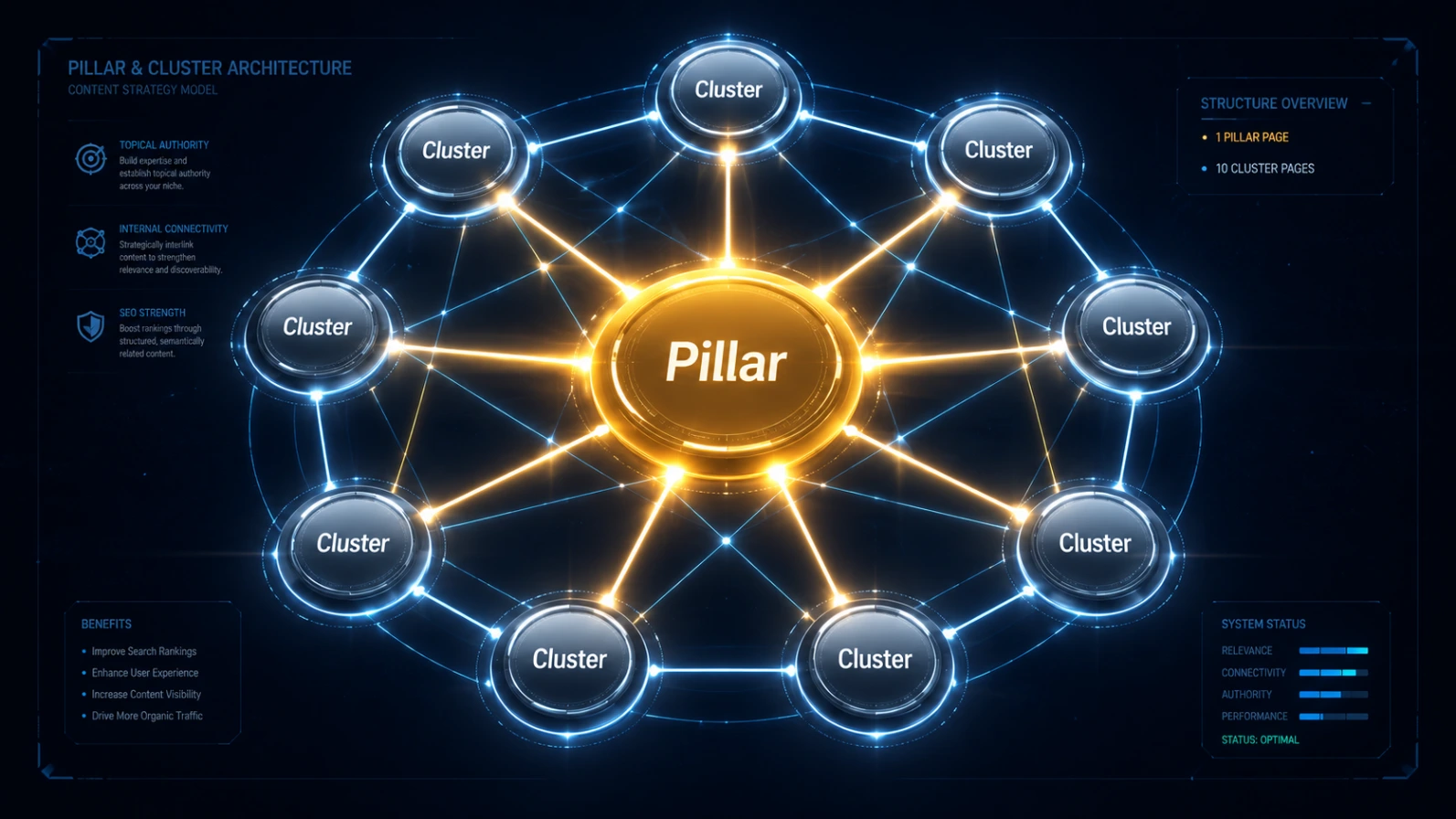
What Is Topical Authority?
Topical authority means Google recognizes your website as a reliable, expert-level source on a specific subject not because other sites link to you, but because you've comprehensively covered that subject.
Think of it like this: a doctor's authority doesn't come from how many people talk about them. It comes from how deeply they know medicine. Topical authority works the same way.
How to Build It Step by Step:
Step 1: Write a Pillar Article
Create one comprehensive "hub" article that covers your main topic at a high level — typically 3,000–5,000 words.
Example: "The Complete Guide to Ranking Without Backlinks in 2026"
Step 2: Build a Content Cluster Around It
Write 15–25 supporting articles that each go deep on a subtopic:
Pillar: Ranking Without Backlinks in 2026
│
├── How to Find Low Competition Keywords (Free Tools Only)
├── On-Page SEO Checklist for 2026
├── Internal Linking: The Strategy Most Bloggers Skip
├── How Google AI Overview Works (And How to Get In It)
├── Search Intent: A Beginner's Complete Guide
├── Content Freshness: How Often to Update Blog Posts
├── Micro-Niche Research Tutorial for New Bloggers
├── User Engagement Signals: What They Are and Why They Matter
├── Technical SEO Basics Without a Developer
└── ... (10–15 more supporting articles)
Step 3: Interlink Everything
Every cluster article should link to the pillar. The pillar should link to every cluster. Related clusters should link to each other.
This internal web of content tells Google: "This site owns this topic."
Why This Works:
Sites that cover a topic deeply and consistently signal expertise and trustworthiness — two of the core components of Google's E-E-A-T (Experience, Expertise, Authoritativeness, Trustworthiness) framework. You're building digital authority from the inside out, not waiting for others to build it for you.
Strategy 4: On-Page SEO Your Main Weapon Without Backlinks
When you don't have backlinks to rely on, on-page SEO carries much more weight. Fortunately, it's entirely within your control.
Title Tag Optimization
A strong title needs:
Primary keyword placed naturally (not forced)
The year (signals freshness)
A clear benefit or promise
Weak: "SEO Guide 2026" Strong: "How to Rank Without Backlinks in 2026 12 Proven Strategies That Actually Work"
The First 100 Words More Important Than Most People Know
Google heavily analyzes early content to understand what a page is about. In your opening paragraph:
Use your primary keyword naturally
Clearly state the topic
Promise the reader what they'll gain
Don't bury the lead. Tell people immediately why they should keep reading.
Meta Description — The CTR Multiplier
Meta descriptions don't directly influence rankings, but they drive click-through rates, which do. A strong meta description follows this pattern:
[Identify the reader's problem] + [Promise your solution] + [Tease what they'll get]
Example:
"Struggling to rank without paying for links? This guide breaks down 12 strategies real bloggers used in 2026 to hit page 1 — no backlinks required."
URL Structure
Keep it short, keyword-focused, and clean:
✅ yoursite.com/rank-without-backlinks-2026 ❌ yoursite.com/post?id=123&category=seo&date=june2026
Heading Structure (H2, H3, H4)
Use keyword variations naturally across your headings — not the same phrase repeated. Think about how your topic branches:
H2: Main sections of the article
H3: Subsections within each main section
H4: Specific points or examples within subsections
Image Optimization
Write descriptive alt text that includes your keyword naturally
Name your image files descriptively: seo-strategy-2026.jpg beats IMG_4521.jpg
Compress images before uploading (TinyPNG is free and excellent)
Strategy 5: AI SEO The 2026 Ranking Unlock
Google's AI Overview now appears at the top of search results for a massive range of queries. Getting featured there can multiply your traffic without needing a single backlink.
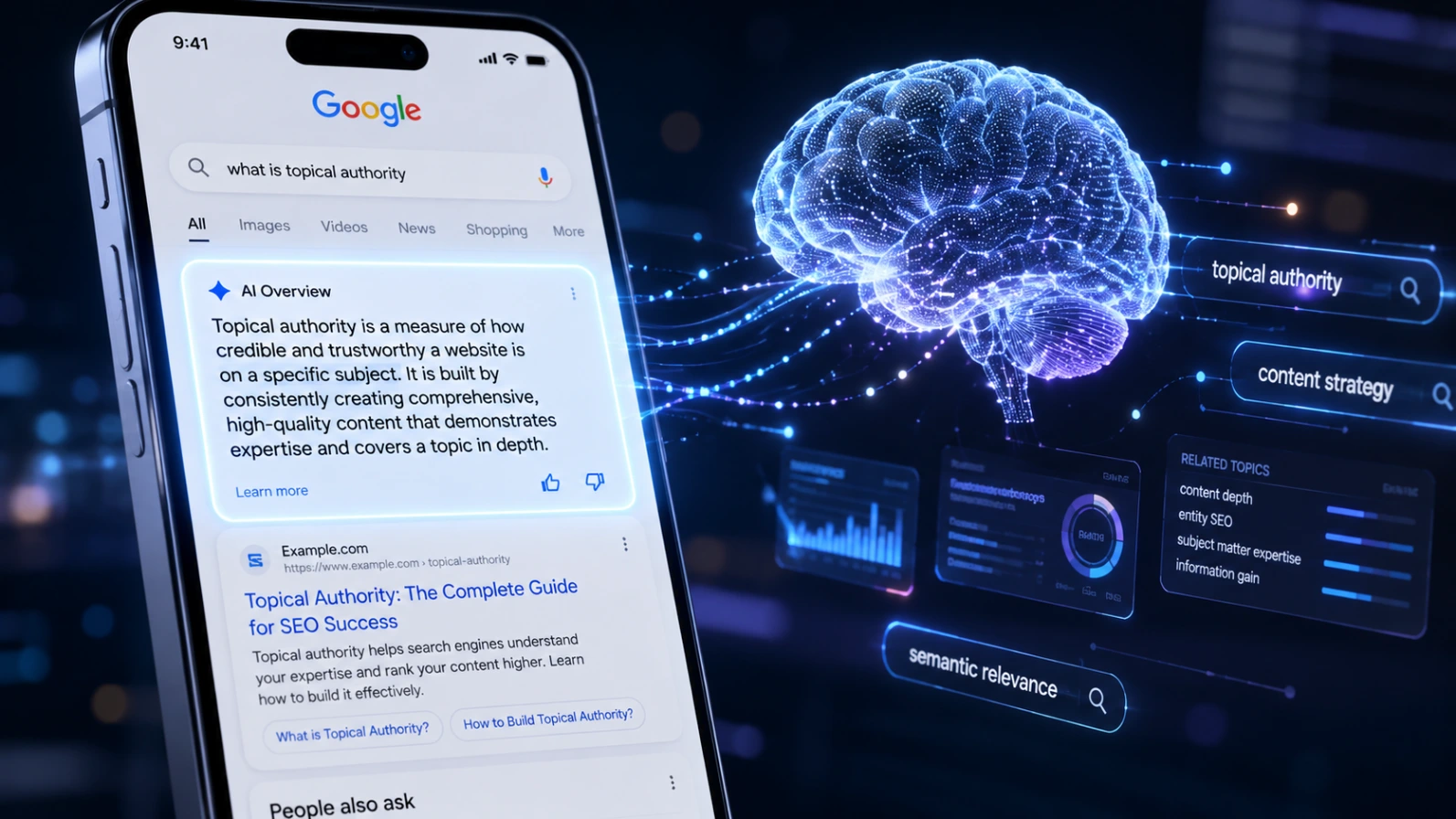
How to Optimize for AI Overviews:
Give direct answers immediately
Right after each heading, write a 2–3 sentence direct answer before going deeper. AI systems extract these clean, direct responses.
Add FAQ sections to every article
## Frequently Asked Questions
**Can you really rank on Google without backlinks in 2026?**
Yes — particularly in low-to-medium competition niches. [...]
**How long does it take to rank without backlinks?**
Typically 3–6 months with consistent publishing and a solid topical authority strategy. [...]
Use structured data (Schema Markup)
Add HowTo schema and FAQ schema to your articles. This gives Google machine-readable structure it can pull directly into AI summaries.
Embrace Semantic SEO
Don't just repeat your main keyword. Use related terms and concepts throughout your article naturally:
If writing about "SEO without backlinks," also naturally include: organic traffic, search engine optimization, ranking factors, content strategy, keyword research, SERP visibility, topical authority, search intent.
Google's AI models understand that these concepts are connected — your content appears richer and more authoritative as a result.
Strategy 6: User Engagement Signals Prove Your Content Is Worth Ranking
Without backlinks, Google has to evaluate your content's value through user behavior. The good news: you can directly influence this.
The Key Engagement Signals Google Watches:
Dwell Time How long does a visitor stay on your page?
To increase it:
Use a table of contents (readers navigate and stay longer)
Embed relevant videos
Write long-form, scannable content
Add interactive elements where relevant
Bounce Rate — Does the user leave after viewing just one page?
To reduce it:
Add strong internal links to related articles
Use "You might also like" sections
Make your introduction compelling enough to keep scrolling
Scroll Depth — How far down the page does the user get?
To improve it:
Use short paragraphs (2–3 lines maximum)
Break up text with bullet points, numbered lists, and visuals
Add a subheading every 200–300 words
Put your best actionable content throughout, not just at the end
Click-Through Rate (CTR) — What percentage of people who see your result in Google actually click?
To improve it:
Write emotionally compelling titles
Use numbers (they stand out)
Make your meta description outcome-focused
Use schema markup to generate rich snippets
Strategy 7: Internal Linking Your Free, Unlimited Backlink System
Internal links are the most underused tool in SEO. Every site has them available, costs nothing to use, and most bloggers treat them as an afterthought.

That's a massive missed opportunity.
The Double Value of Internal Links:
For Google: They distribute page authority across your site, establish clear topic clusters, and help crawlers discover and index your content faster.
For users: They reduce bounce rate, increase pages-per-session, and guide readers to content that answers their next question before they have to search for it.
Internal Linking Best Practices:
Use descriptive anchor text — never "click here"
❌ "Click here for more information" ✅ "See our complete guide to keyword research for beginners"
Follow the Hub-and-Spoke model:
Pillar Article (Hub)
↕ ↕
Cluster 1 Cluster 2
↕ ↕
Sub-topic Sub-topic
Every cluster article links up to the pillar. The pillar links down to every cluster. Related clusters cross-link where it makes sense.
Update old posts when you publish new ones
Every time you publish a new article, go back to 2–3 relevant older articles and add a contextual link to the new post. This distributes authority to fresh content and keeps your old posts feeling current.
Strategy 8: Content Freshness — Signal to Google That You're Active
Google has a strong preference for recently updated content, especially for topics where information changes over time — and SEO is the perfect example.
How to Stay Fresh:
Major update every 60–90 days:
Replace outdated statistics with current ones
Add new sections covering recent developments
Remove examples that are no longer relevant
Expand thin sections that could go deeper
Freshness signals Google looks for:
Updated "Last Modified" date in your page metadata
Increased word count (new content added)
New internal links pointing to recent articles
Removed or replaced broken links
Always display your last updated date visibly at the top of each article. It builds trust with readers and sends a freshness signal to Google.
Strategy 9: Technical SEO — The Foundation Everything Else Rests On
Even the best content won't rank well if your site has technical problems. With no backlink authority to compensate, technical SEO becomes even more critical.

Core Web Vitals — Non-Negotiable in 2026:
Metric | What It Measures | Target |
|---|---|---|
LCP (Largest Contentful Paint) | How fast main content loads | Under 2.5 seconds |
INP (Interaction to Next Paint) | How fast the page responds to input | Under 200ms |
CLS (Cumulative Layout Shift) | How stable the layout is while loading | Under 0.1 |
Free tool: Google PageSpeed Insights — paste any URL and get an instant score with specific recommendations.
Mobile Optimization:
Over 70% of searches happen on mobile devices. If your site isn't mobile-friendly, you're giving up the majority of potential traffic.
Check that:
Font size is at least 16px for body text
Buttons are large enough to tap without zooming
No horizontal scrolling is required
Images don't overflow the screen
Page Speed Quick Wins:
Compress all images before uploading (TinyPNG — free)
Enable browser caching through your hosting or a caching plugin
Remove plugins or scripts you're not actively using
Use a CDN if you have an international audience
Strategy 10: Keyword Research for Zero-Backlink Sites How to Find Winnable Keywords
The entire no-backlink strategy lives or dies on keyword selection. Target the wrong keywords and even perfect content will sit on page 10.
Free Keyword Research Methods:
Google Search Itself (Seriously Underrated)
Type your topic into Google
Study the autocomplete suggestions
Scroll to "People Also Ask" — every question is a keyword idea
Check "Related Searches" at the bottom of the page
These are real queries real people are searching — and because they're long-tail, they're usually low competition.
Google Search Console (Free + Powerful) If your site already has some traffic, Search Console is a goldmine. Filter for keywords where you're ranking in positions 8–20. Those are your "quick wins" — you're already on page 1 or 2, and better, more focused content can push you to the top 3.
Answer The Public / AlsoAsked These tools visualize all the questions being asked around a topic. Perfect for finding article ideas your competitors haven't covered.
Keyword Difficulty Guidelines for No-Backlink Blogs:
Keyword Difficulty (KD) | Strategy |
|---|---|
0–20 | Target immediately — easy wins |
20–40 | Achievable with strong on-page + topical authority |
40–60 | Difficult without some backlinks |
60+ | Avoid until your site has real authority |
Realistic Timeline: When Will You See Results?
Here's an honest, evidence-based timeline for a blog pursuing this strategy correctly:
Month | What to Expect |
|---|---|
1–2 | Pages get indexed, minimal to no traffic |
3–4 | Long-tail keywords start generating small traffic |
5–6 | Multiple articles appearing on pages 1–2 |
7–9 | Topical authority starts compounding |
10–12 | Consistent organic growth, some posts ranking in top 5 |
This timeline assumes you're publishing 2–4 quality articles per month, following all strategies in this guide, and consistently updating old content.
Shortcuts exist — but they don't change this timeline. Patience and consistency do.
The Most Common Mistakes That Kill No-Backlink Strategies
❌ Writing Without Keyword Research
Publishing content nobody searches for means ranking for keywords nobody uses. Traffic = zero even if you're #1.
❌ Jumping Between Niches
One article about SEO, one about recipes, one about travel. Google sees no pattern, builds no trust. Topical authority never forms.
❌ Publishing and Forgetting
Content has a shelf life. Google demotes outdated content. A simple quarterly update can reclaim or improve rankings you've already earned.
❌ Confusing Long With Good
A 10,000-word article that meanders and repeats itself is worse than a tight, focused 1,800-word article that solves the reader's exact problem. Quality is depth of value, not depth of word count.
❌ Ignoring Internal Links
This is a free authority distribution, available on every site, used properly by almost none. Build the habit of linking every new article to 2–3 existing ones, and linking existing articles back to every new one.
Your Complete Action Plan — Start Today
Week 1: Foundation
- Choose a specific micro-niche
- Generate 20–30 keyword ideas using Google autocomplete + PAA
- Shortlist 10 low-competition keywords (KD under 30 ideally)
- Plan your pillar article topic and 10 cluster article topics
Week 2–3: First Content
- Write your pillar article (2,500–4,000 words)
- Optimize title, meta description, URL, and headings
- Add FAQ section and schema markup
- Display a "Last Updated" date prominently
Week 4 Onwards: Build the Cluster
- Publish 1–2 cluster articles per week
- Interlink every new article with related existing articles
- Set up Google Search Console
- Schedule quarterly content audits and updates
The Zero Backlink Ranking Formula (Summary)
Micro-Niche Selection
+
Intent-Matched, High-Quality Content
+
Topical Authority (20–30 related articles)
+
Strong On-Page SEO
+
Strategic Internal Linking
+
User Engagement Optimization
+
Regular Content Freshness Updates
=
Page 1 Rankings — No Backlinks Required
Final Thoughts
Ranking without backlinks isn't a shortcut. It's a smarter long game.
Old SEO asked: "How many links can I build?"
Modern SEO asks: "Can I become the most genuinely helpful, most comprehensive resource on this topic?"
If you commit to the second question — consistently, patiently, with real focus on one niche — Google will reward you. The algorithm has evolved to find and surface the best content, not just the most-linked content.
You don't need a link-building budget. You need a content strategy, a focused niche, and the discipline to keep publishing.
Start today. Pick your niche. Write one article. Write another tomorrow.
The results compound.
Frequently Asked Questions (FAQ)
Yes — but it depends heavily on your niche and keyword selection. A brand new site targeting low-competition, long-tail keywords in a specific micro-niche can absolutely rank within 3–6 months without a single backlink. The mistake most new bloggers make is targeting high-competition keywords too early. Start narrow, build topical authority, and expand once Google trusts your site.
Realistically, expect 3–6 months for your first consistent rankings if you publish 2–4 quality articles per month and follow a topical authority strategy. Some long-tail keywords can rank within 4–8 weeks. Highly competitive keywords will take 9–12+ months even with great content. There are no shortcuts here — but the results are sustainable once they come.
Not a complete replacement — but a very powerful alternative for low-to-medium competition niches. Topical authority signals expertise and trustworthiness to Google, which are core parts of its E-E-A-T framework. For ultra-competitive niches (insurance, finance, legal), you will likely still need some backlinks. For most content niches, topical authority built through consistent, interconnected content is enough.
There's no magic number, but a solid starting point is 20–30 well-structured articles tightly focused on one niche. The key isn't just quantity — it's coverage. You need to cover all the major subtopics, questions, and angles within your niche. Use the "People Also Ask" section on Google to find gaps. Once Google starts seeing your site appear for multiple related queries, authority compounds quickly.
Search intent matching. You can have perfect keyword placement, ideal word count, and flawless technical SEO — but if your content doesn't satisfy what the user actually wants when they search that query, Google will not rank it. Always start by analyzing the top 5 ranking pages for your target keyword to understand exactly what format, depth, and angle Google wants to see.
Absolutely — and they're one of the most underused tools in SEO. Internal links distribute page authority across your site, help Google understand your site structure and topic clusters, and keep users engaged longer. A strong internal linking structure can partially compensate for the lack of external backlinks by concentrating whatever authority your site has onto your most important pages.
Every 60–90 days for posts targeting competitive or time-sensitive keywords. Every 6 months minimum for evergreen content. Update with new stats, examples, and expanded sections — not just minor edits. Google tracks content freshness and tends to favor recently updated pages, especially when the query implies the user wants current information (e.g., anything with "2026" in it).
AI tools can be helpful for research, outlines, and drafts — but publishing raw AI-generated content is increasingly risky. Google's Helpful Content system penalizes content that lacks original insight, real experience, and genuine value. The best approach: use AI to speed up your workflow, but add your own expertise, personal perspective, real examples, and original analysis before publishing. Content that reads like it was written by someone who actually knows the topic will always outperform generic AI output.
Several excellent free tools exist:
- Google Search — Autocomplete, People Also Ask, and Related Searches are all goldmines
- Google Search Console — Find keywords you're already ranking for in positions 8–20 (quick win opportunities)
- AnswerThePublic — Visual map of all questions being asked around a topic
- Google Trends — Check if a topic is growing or declining
- Keyword Surfer (Chrome extension) — Shows search volume directly in Google results for free
The easiest niches to rank in without backlinks share these traits: low-competition, specific audiences, and questions that haven't been thoroughly answered yet. Some strong examples include: local how-to guides, niche hobby content, region-specific professional guides (e.g., freelancing in a specific country), beginner tutorials for emerging tools or platforms, and personal finance for specific demographics. Avoid broad evergreen niches like "weight loss," "make money online," or "travel" unless you drill down to a very specific sub-niche within them.
Yes — and significantly so. Core Web Vitals (LCP, INP, CLS) are confirmed ranking factors. A slow-loading site will rank lower than a fast competitor with similar content. When you don't have backlinks to compensate, technical performance becomes even more critical. Run your site through Google PageSpeed Insights, fix the top issues flagged, and ensure your site loads in under 2.5 seconds on mobile.
It's very difficult but not impossible, depending on how you define "competitive." Keywords with a difficulty score above 50 (on most SEO tools) will generally require some backlinks to crack the top 5. However, you can rank for the long-tail variations of competitive keywords without backlinks — and those long-tail keywords often convert better anyway because they attract more specific, higher-intent visitors.