TL;DR — Key Takeaways
- AI coding tools (GitHub Copilot, Cursor, Claude Code, Codex) have moved from autocomplete to autonomous multi-file agents, but they still fail on long-horizon planning, architecture tradeoffs, and ambiguous requirements.
- Junior developer hiring has genuinely contracted in some sectors — but the work hasn't disappeared, it's been absorbed into senior engineers' workflows, which is reshaping how people enter the field.
- Code review, system design, debugging production incidents, and security reasoning are becoming more valuable, not less, because AI generates plausible-looking code faster than humans can verify it's correct.
- "Prompt engineering" as a standalone skill is fading; what's replacing it is closer to old-fashioned spec writing and requirements gathering, just aimed at a model instead of a junior dev.
- Benchmark performance (SWE-bench, LiveCodeBench, Aider's polyglot benchmark) has climbed sharply, but real-world repos with messy legacy code, tribal knowledge, and undocumented constraints still expose major gaps.
- The biggest shift isn't "will AI write code" — it's already doing that — it's how teams verify, test, and trust that code at scale.
- Developers who learn to work with agents (defining scope, writing tests first, reviewing diffs critically) are seeing real productivity gains; those who blindly accept output are accumulating technical debt faster than ever.
- Software engineering salaries and job postings show bifurcation: senior/staff-level and specialized roles (AI infra, security, platform engineering) are resilient; generic CRUD-app roles are under more pressure.
- Open source maintainers report a new problem: a flood of AI-generated pull requests, often plausible but subtly wrong, that increase review burden rather than reduce it.
- The next 2-3 years likely bring more autonomous agents handling end-to-end tickets, but human-in-the-loop review for anything touching production, security, or money remains essential — and probably permanent.
- New industry research (Anthropic's 2026 Agentic Coding Trends Report) confirms engineers can "fully delegate" only a small fraction of tasks even as AI use climbs — collaboration, not replacement, is the working model.

Introduction
In late 2024, a GitHub engineer described something that's become a familiar pattern on engineering teams: a junior developer opened a pull request that looked clean, passed CI, and had reasonable variable names — but it solved a problem that didn't exist anymore, because the actual requirements had shifted two sprints earlier and nobody had told the AI assistant that wrote most of it. The PR took longer to review and unwind than it would have taken to write from scratch.
That story captures where software development actually stands in 2026, and it's a more useful starting point than another "AI is coming for your job" headline. The tools are real. The productivity gains in narrow contexts are real, with some teams reporting 20-40% faster ticket throughput on well-scoped work. But the failure modes are also real, and they're showing up in production incidents, security audits, and open-source maintainer burnout.
This article is for working developers, engineering managers, and people deciding whether to start a programming career right now. It skips the hype on both ends — neither "AI will replace all programmers by 2027" nor "AI is just autocomplete and nothing has changed." Instead, it looks at what the benchmarks actually measure, what engineering teams are reporting from the trenches, where the job market is genuinely shifting, and what skills are holding their value versus depreciating.
By the end, you'll know which parts of the job AI has already absorbed, which parts it's nowhere close to handling, how hiring and compensation are responding, and what to actually do about it whether you're five years into your career or deciding whether to start one.
How AI Coding Tools Actually Work in 2026 (And Why That Matters)
To understand where this is heading, you need to understand what changed mechanically, not just what marketing copy says changed.
From Autocomplete to Agents
The first wave of AI coding tools — early Copilot, Tabnine — worked on a simple principle: predict the next few tokens based on the current file and some surrounding context. Useful, but bounded. You were still the one deciding what to build, file by file.
What's different now is the agent loop. Tools like Claude Code, Cursor's agent mode, OpenAI's Codex CLI, and Devin operate on a read-plan-act-verify cycle:
- Read: the agent explores the repo — file structure, related code, tests, sometimes git history and issue trackers.
- Plan: it breaks the task into steps, often visibly, so you can interrupt before it touches anything.
- Act: it edits multiple files, runs commands, executes tests.
- Verify: it checks whether tests pass, then iterates if they don't.
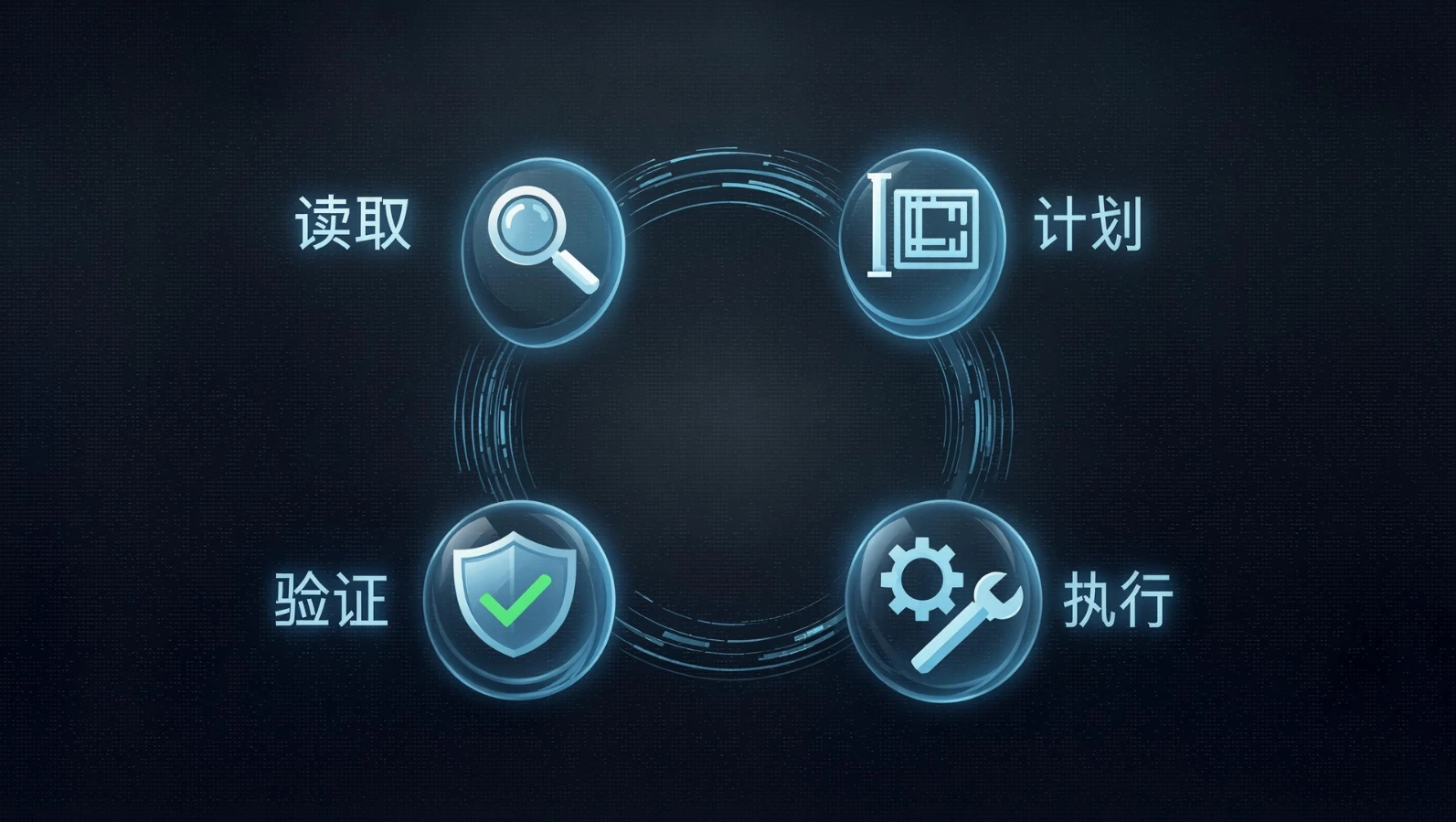
This loop is why agents can now plausibly tackle "fix this bug across the auth and billing modules" instead of just "complete this function." It's also exactly why failures are more expensive when they happen — an agent that's wrong about your billing logic doesn't just produce one bad line, it produces a self-consistent, multi-file change that looks coherent and is wrong in a way that's hard to spot in review.
Why Benchmarks Climbed So Fast — and Why That's Misleading
SWE-bench (which tests whether models can resolve real GitHub issues from popular open-source repos) has gone from single-digit resolve rates in 2023 to scores well above 50% on the verified subset for top models by 2026. That's a genuinely large jump, and it's not fake — these models really are resolving real issues from real repos.
But here's what the benchmark doesn't capture, and what every staff engineer who's tried these tools on their actual codebase will tell you:
- SWE-bench issues come with a clear acceptance test already in the repo. Most real tickets don't. Half the job of a senior engineer is figuring out what "done" even means.
- The repos in the benchmark are popular, well-documented open-source projects. Your internal monolith with eight years of undocumented business logic and three different ORMs is not that.
- There's no tribal knowledge requirement. No benchmark question requires knowing "we tried that approach in 2022 and it caused an outage because of how the payment processor retries webhooks."
This is the gap that matters most for the future of programming: AI is excellent at well-specified, well-tested, narrowly-scoped problems in well-structured codebases, and it's mediocre-to-bad at ambiguous, under-specified problems in messy codebases with invisible constraints. Most of the actual economic value of senior engineers lives in the second category.
What's Genuinely Changing: A Section-by-Section Breakdown
1. The Job of "Writing Code" Is Shrinking; The Job of "Specifying and Verifying Code" Is Growing
Developers who've adopted AI tools seriously report a real shift in where their time goes. Less time typing syntax. More time:
Writing precise specs and acceptance criteria, because vague prompts produce vague (or confidently wrong) code
Reviewing diffs — not skimming them, actually reading them, because AI-generated code that's wrong tends to be wrong in subtle, plausible-looking ways rather than obviously broken ways
Writing and maintaining tests, since a strong test suite is what lets you safely let an agent loose on a codebase
Making architecture decisions that the model isn't positioned to make, because it doesn't carry the constraints, history, and business context that live in people's heads
This isn't a small stylistic shift. It changes what "good at programming" means day to day. Typing speed and syntax memorization, already declining in relevance for a decade, are now close to irrelevant. Reading code critically, reasoning about edge cases, and writing a spec precise enough that an AI (or a junior engineer) can't misinterpret it — those skills are appreciated.
2. Junior Developer Hiring Has Genuinely Contracted — But the Work Didn't Vanish

This is one of the most data-backed and uncomfortable parts of the current landscape. Multiple sources — Indeed Hiring Lab data, LinkedIn's economic graph reports, and anecdotal hiring freezes at mid-size tech companies — point to a real contraction in entry-level software engineering postings relative to pre-2023 levels.
The mechanism isn't mysterious: the bulk of junior developer work historically was bounded, well-specified tasks: implement this endpoint, fix this bug, write this test, build this CRUD screen. That's almost exactly the category AI agents are best at. A senior engineer with a capable AI agent can now absorb a meaningful slice of what used to require hiring a junior to do.
What this means in practice, reported consistently across engineering blogs and Hacker News threads from hiring managers:
Teams are hiring fewer juniors per senior engineer than they did in 2021-2022
The juniors who do get hired are increasingly expected to operate more like "junior-plus" capable of reviewing AI output critically, not just producing code
Some companies are explicitly rethinking the traditional career ladder, since the "do grunt work for two years to build judgment" pipeline assumed grunt work that AI now does
This is a real structural shift, not a moral panic. It also doesn't mean programming careers are dying, it means the entry path is changing, and people starting out need a different strategy than "get really good at LeetCode and ship CRUD apps."
3. Code Review Burden Is Increasing, Not Decreasing
This one surprises people who assume AI-written code review will be faster. The opposite is showing up in practice, and open-source maintainers have been especially vocal about it.
Curl's maintainer, Daniel Stenberg, publicly described shutting down most AI-generated vulnerability reports submitted to curl's bug bounty program in 2024-2025 because they were confident-sounding nonsense that consumed real triage time. Several other major open-source projects (including some in the Python and Rust ecosystems) have reported similar patterns: a flood of plausible-but-wrong pull requests and issue reports, generated quickly and submitted without real understanding, that increase maintainer workload rather than decrease it.

Inside companies, the pattern is gentler but structurally similar: a PR that took an AI five minutes to generate can take a human reviewer thirty minutes to properly verify, because you can no longer assume the author understood what they wrote. The asymmetry, fast to generate, slow to verify is one of the defining tensions of this period, and it's pushing teams toward stricter test coverage requirements and more disciplined review processes as a countermeasure.
4. Specialized and Senior Roles Are More Resilient Than Generalist Roles
Job market data through 2025 and into 2026 shows a bifurcation rather than a uniform decline:
Role category | 2026 demand trend | Why |
|---|---|---|
Generic full-stack / CRUD app developer | Softening | High overlap with what agents handle well |
Senior / staff backend engineer | Stable to growing | Architecture, tradeoffs, legacy systems — low AI coverage |
AI/ML infrastructure & platform engineer | Strong growth | New category created by the shift itself |
Security engineer | Strong growth | AI-assisted code increases the volume of code needing security review |
DevOps / SRE | Stable | Production reliability still requires deep system + organizational knowledge |
Engineering manager with technical depth | Stable | Judgment calls on what to build, not how to type it |
Pure entry-level / bootcamp-grad roles | Contracting | Smallest, most well-specified tasks are the easiest for AI to absorb |
This table reflects a consistent theme across Stack Overflow's annual developer survey, LinkedIn jobs data, and direct reporting from engineering leaders: demand isn't disappearing, it's concentrating around judgment, context, and verification — exactly the things current AI tools are weakest at.
5. "Prompt Engineering" Is Already Becoming a Less Useful Phrase
In 2023, "prompt engineering" sounded like a durable new skill. By 2026, most experienced practitioners describe it differently: it's just clear technical writing and requirements specification, applied to a different audience. The skill that actually transfers and compounds is the same one that's always mattered for working with any team — stating what you want precisely enough that someone (or something) without your full context can execute on it correctly.
This matters for career planning. If you're investing time in "prompt engineering" as a narrow, tool-specific skill, you're investing in something that's converging back toward general communication and systems-thinking skills that were always valuable. The advice "get good at writing clear specs and reading code critically" was good advice in 2015 and remains good advice now — it's just higher-leverage today because there's an agent on the other end of it that will execute literally and immediately.
Practical Example: Where AI Genuinely Helps vs. Where It Quietly Fails
Where it helps (high confidence, backed by widespread practitioner reports)
- Boilerplate and scaffolding: new CRUD endpoints, standard test setups, config files, migration scripts. Fast, low-risk, easy to verify.
- Translating between languages/frameworks: porting a Python script to TypeScript, migrating from one ORM's syntax to another. The logic is preserved; the model is mostly doing mechanical transformation.
- Explaining unfamiliar code: pointing an agent at a legacy file and asking "what does this do and why" is genuinely one of the highest-value, lowest-risk uses of these tools.
- Writing first-draft tests: generating a broad set of test cases to start from, which you then prune and correct, is faster than starting from zero.
- Searching/refactoring across a large codebase: "rename this pattern everywhere it's used, accounting for these edge cases" is a strong agent use case because it's mechanical and verifiable by diff review.
Where it quietly fails (and why this matters more)
- Cross-cutting architectural decisions: should this be a separate microservice or a module in the monolith? AI has no skin in the game for the operational cost of that decision six months from now.
- Business logic with invisible constraints: "why does this discount code check seem redundant" often has an answer like "because of a fraud incident in 2023 that's not documented anywhere but in a Slack thread." AI can't know what isn't written down.
- Long-horizon planning across a sprint or quarter: agents are good within a single task; they don't reliably hold a multi-week plan and notice when assumptions made in week one are violated by week three.
- Security-sensitive code: models can write code that passes tests and still introduces subtle vulnerabilities — timing attacks, improper input validation, insecure defaults — that require specialized review, not just functional correctness.
- Knowing when not to write code: sometimes the right answer to a ticket is "don't build this, the existing feature already covers it" or "this should be a product conversation, not an engineering one." Agents default toward producing output, not toward pushing back on the premise.
The pattern across all of these: AI is strong wherever correctness can be checked mechanically (tests pass, output matches a pattern, diff looks reasonable) and weak wherever correctness depends on context that isn't written down anywhere in the repo.
Benchmarks & Performance Analysis
A few concrete data points worth knowing, since vague claims about "AI getting better at coding" aren't useful without numbers attached.
- SWE-bench Verified: top models have moved from roughly 15-20% resolve rates in early 2024 to past 50% by mid-2025/2026 on this curated, human-verified subset of real GitHub issues. Significant progress, but remember the caveat above about issue clarity and acceptance criteria already being defined.
- Aider's polyglot benchmark: designed to be harder and more language-diverse than SWE-bench, scores here remain meaningfully lower across all models, which is a useful reality check against benchmark-specific overfitting.
- LiveCodeBench: built to reduce contamination by using problems released after model training cutoffs. Performance here tends to run lower than on older, possibly-memorized benchmarks, which is a flag that some earlier benchmark gains were partly about familiarity with the test set rather than pure capability.
- Cost: agentic coding runs (multiple tool calls, file reads, iterative test-and-fix loops) cost meaningfully more per task than a single chat completion — often 10-50x the token cost of a simple question — because the agent loop involves many round trips. This matters for ROI calculations: a task that takes an agent 40 tool calls to complete needs to save more than 40 tool-calls'-worth of engineering time to be worth it, and that's before counting review time.
- Latency vs. throughput tradeoff: autonomous agents working in the background (overnight ticket resolution, async PR generation) trade immediate latency for engineer attention — you're not staring at a spinner, but you are spending review time later. Several teams report this shifts bottlenecks rather than eliminating them: the queue moves from "engineer's coding time" to "engineer's review time."
What this means in practice: the benchmark trend line is genuinely impressive and worth taking seriously, but it measures capability on bounded, gradeable tasks. The economics of using these tools well — including the very real cost of verification — matter just as much as raw resolve rate.
Community Insights: What Developers Are Actually Saying
A consistent set of themes recur across Hacker News threads, the r/programming and r/ExperiencedDevs subreddits, and GitHub Discussions through 2025 and into 2026:
Recurring praise:
- Agents are genuinely good at unblocking developers stuck on unfamiliar parts of a stack — "what's the idiomatic way to do X in Rust" type questions, answered instantly instead of via a 20-minute documentation hunt.
- Senior engineers report the biggest gains not from AI writing net-new features, but from AI handling the "I know exactly what I want, I just don't want to type it" category of work — migrations, repetitive refactors, test scaffolding.
- Solo founders and small teams report being able to ship features that would previously have required hiring, which is reshaping what's possible for very small teams specifically.
Recurring complaints:
- "Reviewing AI code feels like reviewing a very confident junior who never gets tired and never says 'I'm not sure.'" This shows up almost verbatim across multiple threads — the model rarely flags its own uncertainty, which means the burden of catching mistakes falls entirely on the reviewer.
- Maintainers of popular open-source projects describe a rise in low-effort, AI-generated PRs and bug reports that look plausible but waste real triage time — this is now frequently cited as a contributor to maintainer burnout.
- Several experienced engineers describe a "skill atrophy" worry — junior engineers who lean on AI agents heavily without first building their own debugging instincts may end up with large gaps in fundamental troubleshooting ability, since they've never had to slowly build the mental model that comes from struggling through a bug manually.
- A recurring practical complaint: agents tend to be overconfident about test coverage, sometimes writing tests that pass but don't actually exercise the behavior that matters, which can create a false sense of safety.
Recurring tradeoffs people have made peace with:
- Most experienced practitioners have landed on a workflow where AI handles the first draft and humans do final review and architectural sign-off, rather than either extreme (fully manual or fully autonomous).
- A common piece of advice: treat AI-generated code with the same skepticism you'd apply to code copied from Stack Overflow — useful starting point, never trusted without understanding it yourself.
Best Practices for Working With AI Coding Tools in 2026
- Write tests before or alongside the spec, not after the AI writes the code. A test suite written before generation gives the agent (and you) a concrete, mechanical definition of "done" — this single habit closes most of the gap between "looks right" and "is right."
- Review diffs like you'd review a contractor's invoice, not like you'd skim a coworker's PR. Assume nothing about intent or understanding. Read every changed line, not just the parts that look unusual.
- Keep architecture decisions explicitly human. Use AI to explore options and surface tradeoffs, but make the final call yourself, and document the reasoning somewhere durable (an ADR, a design doc) since that context is exactly what's missing from future AI sessions on the same codebase.
- Scope tasks tightly before handing them to an agent. Vague prompts produce code that's confidently wrong in ways that take longer to debug than to have written manually. A clear, bounded spec is the single highest-leverage thing you can produce.
- Don't let junior engineers skip the struggle entirely. Debugging instinct is built by spending time confused and then resolving that confusion yourself. Encourage AI use for unblocking after a real attempt, not as the first move on every problem.
- Treat AI-suggested security-sensitive code as untrusted until proven otherwise. Authentication, payment handling, input validation, and cryptography deserve a human security review regardless of how clean the generated code looks.
- Maintain documentation of tribal knowledge, deliberately. Every undocumented "why" in your codebase is a blind spot for any AI tool working on it later — and a blind spot for new human hires too. This was always good practice; it's now higher-leverage.
- Measure productivity by outcomes, not lines of code or PRs merged per day. Teams that reward raw output volume see exactly what you'd expect: more volume, more subtly broken code, more review debt.
Common Mistakes Teams Are Making Right Now
- Trusting agent-written tests as proof of correctness. Why it happens: tests passing feels like verification. Why it's wrong: an agent can write a test that matches its own (possibly incorrect) implementation rather than the actual intended behavior. Fix: write key tests independently, or at minimum review test logic as carefully as the implementation.
- Removing code review rigor because "the AI already checked it." Why it happens: teams assume more automated tooling means less human oversight is needed. Why it's wrong: AI-generated code needs more scrutiny per line, not less, precisely because it's produced faster and the author (the model) can't be asked "wait, why did you do it this way" in any meaningful sense. Fix: if anything, tighten review standards for AI-assisted PRs.
- Cutting junior hiring entirely instead of changing how juniors are trained. Why it happens: short-term cost savings look attractive when an AI agent can do bounded tasks cheaply. Why it's wrong: this starves the pipeline that produces senior engineers in 3-5 years, which is a problem every team will eventually feel. Fix: hire fewer but redesign the junior role around review, judgment-building, and AI-assisted (not AI-replaced) execution.
- Letting agents touch production-critical code without a human architectural review. Why it happens: it's fast and the diff looks reasonable. Why it's wrong: agents lack the organizational memory of past incidents, and "looks reasonable" isn't the same as "accounts for the outage we had in 2023." Fix: gate production-path and security-sensitive changes behind mandatory senior human review, no exceptions.
- Assuming benchmark scores translate directly to your codebase. Why it happens: marketing materials cite SWE-bench numbers as a general capability signal. Why it's wrong: your codebase doesn't look like the curated, well-documented open-source repos in these benchmarks. Fix: pilot any new tool on your actual, messy internal code before trusting headline numbers.
Advanced Tips
- Use agents for "compile a list of every place this pattern appears" tasks before refactors. This kind of reconnaissance work is exactly where mechanical thoroughness beats human patience, and it's low-risk because you're reviewing a list, not trusting a change.
- Pair AI-generated PRs with mandatory self-review checklists that ask the human submitter to explain, in their own words, what changed and why — this single step catches a surprising number of "I didn't actually read what it did" submissions before they reach a reviewer.
- Run agents in sandboxed branches with CI gates, not directly against main, even for small tasks — the cost of an agent's mistake reaching production is categorically higher than the cost of catching it in CI.
- Invest specifically in spec-writing and requirements-gathering skill development for your team, since this is the highest-leverage human skill in an AI-assisted workflow and it's rarely taught explicitly in traditional CS curricula.
- Track review time per AI-assisted PR versus per fully-human PR as a real metric, not just merge velocity — several teams have found their apparent productivity gains shrink or disappear once review time is honestly accounted for.
Latest Developments Through Early-to-Mid 2026
A few notable, verifiable threads worth knowing about as of this writing:
Agentic coding tools (Claude Code, Cursor's agent mode, GitHub Copilot's workspace and agent features, OpenAI's Codex CLI) have continued to mature toward longer-running, more autonomous multi-step tasks, with stronger sandboxing and permission models for what an agent can touch without explicit approval.
Open-source maintainer fatigue around AI-generated, low-quality contributions has become enough of a recognized problem that several major projects have published explicit contribution policies addressing AI-assisted PRs and bug reports specifically.
Enterprise adoption has shifted from experimentation to more formalized governance — many engineering organizations now have explicit policies about which categories of code (security, payments, infrastructure-as-code) require mandatory human review regardless of how the code was produced.
Compensation data continues to show the bifurcation pattern described earlier: senior and specialized roles holding or gaining value, broad entry-level postings contracting in several markets.
Anthropic's own 2026 Agentic Coding Trends Report describes a move from single agents to coordinated multi-agent teams, and from minute-scale tasks to agents that work autonomously for days at a time on larger systems — details covered in the new section below.
This section will naturally age — if you're reading this well after publication, treat the specific tool names and adoption numbers as a snapshot, and check current sources for what's shipped since.
What New 2026 Reporting Adds to This Picture
Since this article was first drafted, more direct evidence has emerged — including Anthropic's own internal research on how engineers actually use agentic tools, and first-hand accounts from working developers. A few points are worth folding into the picture above.
The "fully delegate" gap is real and measurable
Anthropic's internal Societal Impacts research, published in its 2026 Agentic Coding Trends Report, found that while engineers report using AI in roughly 60% of their work, they can "fully delegate" only 0-20% of tasks. This lines up exactly with the verification-burden theme covered earlier: engineers delegate work that's easy to "sniff-check" for correctness or is low-stakes, and keep conceptually difficult, design-dependent work for themselves.
One Anthropic engineer summarized it as only trusting AI output in cases "where I know what the answer should be or should look like" — a skill built by doing the work manually first, which directly reinforces the article's advice not to let juniors skip the struggle.
Multi-agent orchestration and longer task horizons are arriving faster than expected
The same report describes a shift from single agents handling minute-scale tasks toward coordinated teams of specialized agents working in parallel — an orchestrator agent coordinating sub-agents, each with its own context window — and individual agents sustaining autonomous work across days rather than minutes.
A cited example: engineers at Rakuten had an agent complete a complex activation-vector-extraction task across a 12.5-million-line, multi-language codebase (vLLM) in seven hours of fully autonomous work, reaching 99.9% numerical accuracy against a reference implementation. This pushes the "agent loop" described earlier in this article toward longer, less-supervised stretches — but the report is explicit that this expands what gets checkpointed by humans at key decision points, not whether it gets checkpointed at all.
Productivity gains are showing up as more output, not just less time per task
Internal data cited in the report found engineers spend less time per task category but produce a much larger volume of output overall — and that roughly 27% of AI-assisted work is work that simply wouldn't have happened otherwise: exploratory dashboards, scaffolding for ideas that weren't worth the manual effort before, and minor "papercut" fixes that used to be permanently deprioritized. That's a meaningfully different claim than "AI just makes the same work faster," and it complicates any simple before/after productivity comparison between AI-assisted and unassisted teams.
Coding capability is starting to spread well beyond engineering teams
The report also documents non-engineers — legal, design, and operations staff — building their own automations and prototypes with agentic tools rather than filing a ticket and waiting on an engineering team. One example: a lawyer with no coding background built self-service triage tools for incoming legal requests using Claude Code. This is a separate trend from anything happening to professional software engineering roles, but it does suggest "who counts as a person who can produce working software" is becoming a more porous category — which, longer-term, may also affect demand for some categories of internal tooling work historically done by junior engineers.
Practitioner sentiment is split between liberation and dread — and both camps are right about something
A widely discussed essay by developer Andrew Montalenti (April 2026) names a tension worth stating directly: the same agentic tools that excite some programmers as "an army of junior programmers, effectively for free" are, for others, evidence that the craft of hand-written code is being reduced to a disposable intermediate artifact rather than something read and valued in its own right. His framing — that programmers are an early-adopter market for AI's broader disruption of knowledge work, much as they were early adopters of the internet, remote work, and open-source collaboration tools decades earlier — is a useful lens for why this debate feels more existential to developers than to most other professions encountering AI.
Separately, developer Andy Wong's account of reviving years-old, shelved side projects with GitHub Copilot illustrates the more optimistic case concretely: AI lowering the "activation energy" required to resume abandoned work, rather than simply speeding up the typing on active work. Both accounts are consistent with the article's earlier claim that this is a redistribution of effort, not a simple replacement — they just describe that redistribution from opposite emotional vantage points.
Net effect on this article's thesis
None of this new reporting overturns the core argument made above — if anything, it sharpens it. The shift really is toward orchestration, review, and judgment, exactly as described in this article's "Future Outlook" section, and the newer evidence shows that shift moving faster and further than expected even a year ago (multi-agent teams, day-scale autonomy, non-engineers shipping their own tools) while the underlying constraint stays the same: human attention is the bottleneck, and effective delegation depends on already knowing what "correct" looks like.
Future Outlook: Where This Actually Goes
Based on current trajectory, capability gaps, and how engineering organizations are responding, a few reasonably well-supported predictions:
More autonomous handling of well-bounded tickets, not full autonomy. The agent loop (read-plan-act-verify) will keep improving at scope, context window, and tool use, but the fundamental gap — lack of organizational memory and judgment about ambiguous tradeoffs — isn't a capability problem that scales away with more parameters or longer context. It's a problem of information that simply doesn't exist anywhere a model can read it. Expect agents to handle larger well-specified chunks of work, not to start making the judgment calls that currently require a human.
The junior-to-senior pipeline gets explicitly redesigned, not just informally squeezed. The current pattern — fewer junior hires, quiet absorption of junior-level work into senior workflows — isn't sustainable as a long-term talent strategy. Expect more formal apprenticeship-style programs that pair junior engineers with AI tools deliberately, framed around building review judgment rather than raw code production, because companies that don't will eventually run out of senior engineers.
Code review and verification tooling becomes a genuine product category, not just a process. Expect growth in tools specifically built to catch the failure modes of AI-generated code — subtle logic errors, test-implementation mismatches, security issues introduced by plausible-looking but incorrect patterns. This is a natural market response to the review-burden problem maintainers and teams are already reporting.
"Programming" as a job title increasingly means systems thinking and verification, not syntax production. This isn't new — it's been the multi-decade trend since high-level languages replaced assembly — but AI compresses the timeline. The durable skills (debugging methodology, system design, security reasoning, clear technical communication) keep their value or grow it; the skills closest to "typing syntax correctly" keep losing value, as they have for years.
Specialization deepens rather than flattens. AI infrastructure, security, platform engineering, and deeply domain-specific software (medical, financial, safety-critical systems) are likely to remain durably human-intensive, because the cost of being wrong is high and the constraints are rarely fully captured in any spec a model could work from.
None of this supports either extreme headline you'll see elsewhere — "programmers are obsolete" or "nothing has really changed." What's actually happening is a redistribution of where the valuable, hard-to-automate work lives, and it's happening faster than most career advice has caught up with.
Frequently Asked Questions
Yes, but the path looks different than it did in 2015. Entry-level hiring has tightened in some sectors, so it's worth pairing coding skill with strong fundamentals in debugging, system design, and clear technical communication rather than relying purely on coding bootcamp-style output.
Not based on current evidence. AI handles well-specified, well-tested, mechanically verifiable tasks well. It struggles with ambiguous requirements, undocumented organizational context, and long-horizon judgment calls — and those gaps aren't simply closing with more model scale, because they're information gaps, not capability gaps. Anthropic's own 2026 research backs this up directly: engineers using AI in 60% of their work can still only fully delegate a small fraction of tasks.
Debugging methodology, system design, security fundamentals, and the ability to write clear, unambiguous specifications. These transfer whether you're directing an AI agent or a human teammate, and they're the parts of the job least exposed to current AI weaknesses.
They're worth it if they teach fundamentals (data structures, debugging, system design, how to read unfamiliar code) rather than just "build this app by following these steps." Bootcamps that only teach syntax and copy-paste patterns are teaching the part of the job AI already does well.
Because a large share of traditional junior work — bounded, well-specified tasks — is exactly what AI agents handle best. Productivity gains are real, but they're partly coming from substituting AI for the kind of work juniors used to do, not purely from making every engineer faster at everything.
As a narrow, tool-specific skill, probably not durable. As a manifestation of clear technical writing and requirements specification, yes — that skill has always mattered and is becoming more visible and valuable now that there's an agent on the other end of it that executes literally.
The same way you'd verify any code: read it, understand the logic, check it against tests that you trust (ideally written or reviewed independently of the generation process), and be especially skeptical of code that "looks right" but that you didn't fully trace through yourself.
Treating AI-assisted output as needing less review than human-written code, when the opposite is true — it needs equal or greater scrutiny because the author can't be questioned about intent the way a human teammate can.
Job market and compensation data through 2025-2026 do show senior, staff, and specialized roles (security, AI infrastructure, platform engineering) holding value better than generalist entry-level roles, consistent with demand concentrating around judgment and verification work that AI doesn't reliably handle.
It's a reasonable concern raised consistently by experienced engineers. Debugging instinct comes from sitting with confusion and resolving it yourself. Using AI to unblock after a genuine attempt is different from using it as a first move on every problem — the latter risks skipping the exact practice that builds the skill.
Look at multiple benchmarks together (SWE-bench Verified, Aider's polyglot benchmark, LiveCodeBench) rather than any single headline number, and weight your own pilot testing on your actual codebase more heavily than any public benchmark, since none of them reflect your specific tech stack, history, or undocumented constraints.
Yes — this is well-documented from maintainers of major projects (curl being a widely cited example) describing a real increase in plausible-but-wrong AI-generated bug reports and pull requests that increase triage burden rather than reduce it.
Redesign junior roles around review and judgment-building rather than pure code production, mandate stricter human review for AI-assisted PRs (not looser), and measure review time honestly when calculating whether AI tooling is actually saving time net of verification cost.
The mechanical/syntax gap is mostly already closed. The harder gap — organizational memory, ambiguous tradeoffs, judgment about what shouldn't be built — depends on information that often isn't written down anywhere a model could learn from, which makes it a fundamentally different and slower problem to solve than raw capability scaling.
Both, increasingly. Industry reporting through 2026 (including Anthropic's own trends research) describes a shift from single agents handling one task at a time toward coordinated teams of specialized agents working in parallel. Even solo developers are starting to benefit from learning task decomposition — breaking a project into pieces an orchestrator agent can hand to specialized sub-agents — rather than relying on one long conversation with one agent.
Conclusion
The future of programming in 2026 isn't a story about replacement — it's a story about redistribution. AI has genuinely absorbed a meaningful share of the bounded, well-specified, mechanically verifiable work that used to define a large chunk of software engineering, especially at the junior level. That's a real shift with real consequences for hiring, career paths, and how teams are structured, and it deserves honest treatment rather than denial.
What it hasn't done — and what current evidence suggests it isn't close to doing — is to replace the judgment, context, and verification work that sits at the center of senior and specialized engineering roles. If anything, that work is becoming more valuable, because AI-generated code is fast to produce and slow to verify, and someone has to do the verifying. Anthropic's own 2026 research on its customers makes the point bluntly: engineers can delegate maybe a fifth of their work at most, even when AI touches the majority of what they do day to day.
If you're building a programming career right now, the practical takeaway is straightforward: don't compete with AI on producing syntax quickly, because you'll lose that race and it doesn't matter anyway. Compete on the things that are still scarce — clear thinking about ambiguous problems, rigorous code review, system design judgment, and the patience to actually understand what you're shipping. That's where the future of programming is heading, and it's a future with real, durable demand for people who can do that work well.