Introduction
On June 16, 2026, SpaceX signed a $60 billion deal to acquire Anysphere, the company behind Cursor, one of the most widely used AI coding assistants on the market, with more than 1 million paying users and over half of the Fortune 500 among its customers. The deal is expected to close in the third quarter of 2026, pending regulatory approval, and it will fold Cursor into SpaceX's growing AI division, which is built around xAI and the Grok models.
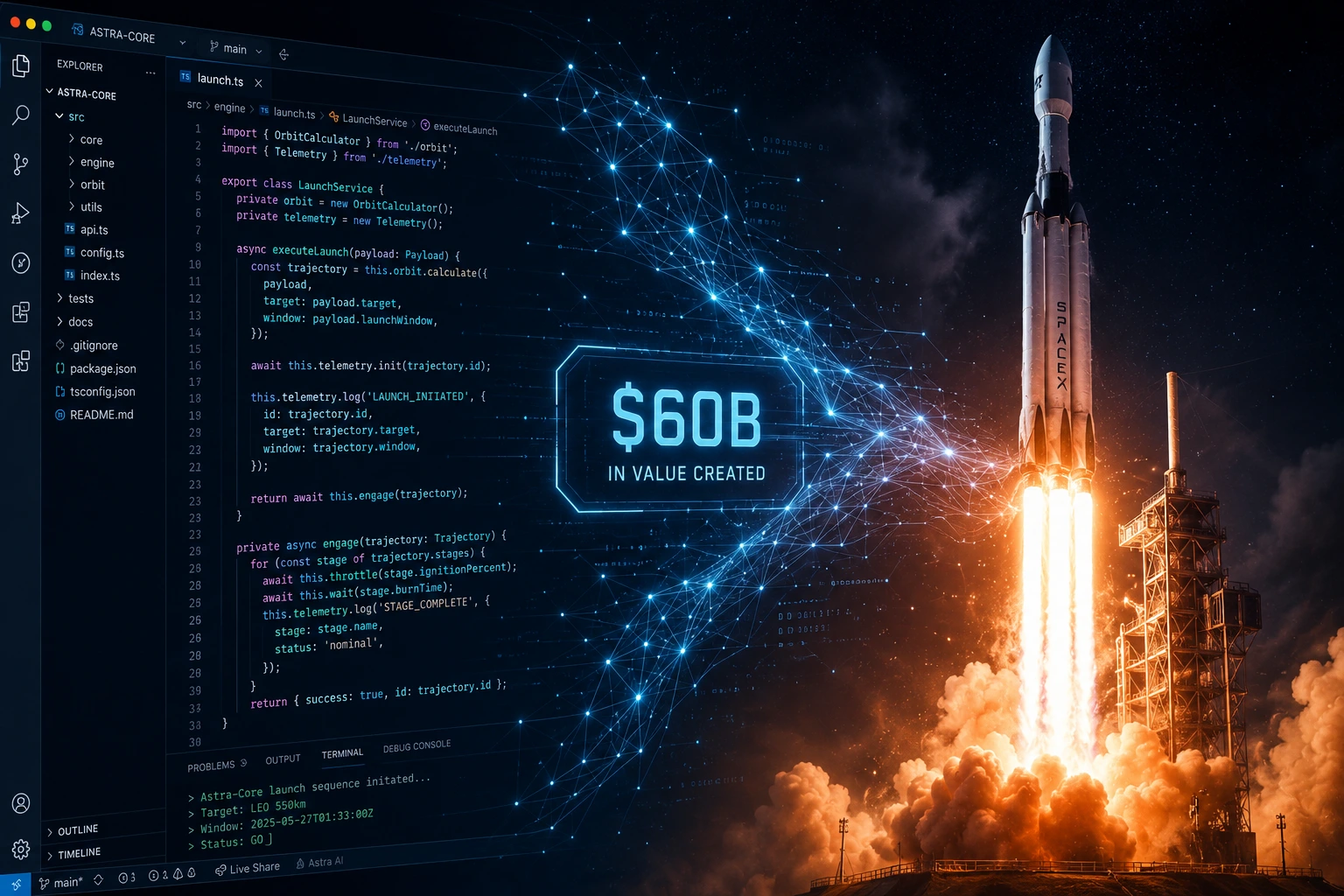
If you use Cursor, or you're thinking about adopting an AI coding assistant for your team, this isn't just business news. It's a developer trust story. Every time you type in Cursor, your code, your file structure, and sometimes your entire codebase context gets sent somewhere for processing. Who owns that "somewhere" matters. The Cursor acquisition changes the company that sits behind your keyboard, and that has real implications for source code privacy, developer data security, and code security at companies of every size.
This article breaks down what the acquisition actually means, why developers are worried, what's changing (and what isn't, at least for now), and how to protect your codebase no matter which AI coding tool you use. We'll also compare Cursor's privacy posture to GitHub Copilot's, since that comparison keeps coming up in developer discussions, and we'll give you a practical, step-by-step way to audit your own AI tooling risk today.
Quick-Fix Summary Box
If you only have two minutes, here's what to do right now:
Priority | Action | Why |
|---|---|---|
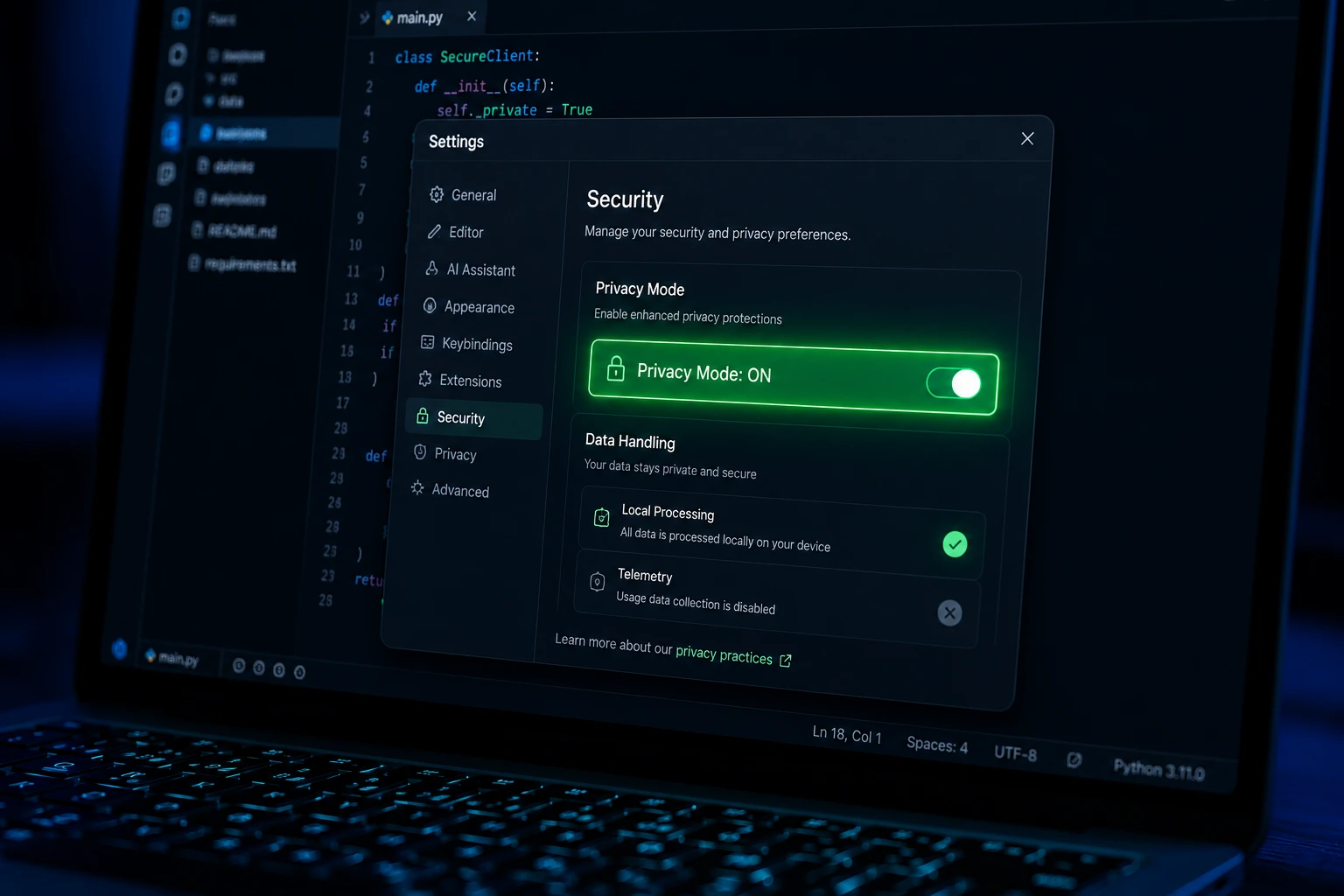
1 | Open Cursor's privacy settings and confirm "Privacy Mode" is on | Privacy Mode is supposed to block code retention and training use |
2 | Re-read your organization's Cursor enterprise agreement (if applicable) | Acquisitions can change which subprocessors handle your data |
3 | Check which AI model you're routed to inside Cursor | Model routing affects who actually processes your code |
4 | Avoid pasting secrets, API keys, or credentials into any AI assistant | This risk exists regardless of who owns the tool |
5 | Set a calendar reminder to review Cursor's updated privacy policy after the deal closes (expected Q3 2026) | Terms can legally change once a new parent company takes over |
What Is the Cursor Acquisition, and Why Does It Matter for Developer Trust?
Cursor is an AI-powered code editor built as a fork of Visual Studio Code. It indexes your codebase locally, then sends relevant context to large language models like Claude, GPT, or Gemini to generate code completions, chat answers, and multi-file edits. Founded as Anysphere in 2022, the company grew explosively:
its Series A valuation hit $400 million in November 2024, surged to $2.5 billion four months later, and reached $29.3 billion by its Series D round in November 2025, with annualized recurring revenue reportedly crossing $2 billion — the fastest climb to that milestone in B2B software history.
In April 2026, SpaceX struck a deal that gave it the option to acquire Cursor later in the year for $60 billion, or pay $10 billion to keep the companies' existing technical partnership focused on training Cursor's models on SpaceX's Colossus computer. Just days after SpaceX's record-breaking IPO, the company exercised that option. The acquisition will make Cursor a wholly owned subsidiary of SpaceX, sitting alongside SpaceX's AI division, xAI, and the Grok chatbot.
For developers, the core issue isn't the price tag. It's the change in who ultimately controls the infrastructure, the data flows, and the future model strategy behind a tool that many engineers use to touch proprietary source code every single day. Industry analysts have described the deal as changing the counterparty but not the architecture — code still routes through cloud inference, but increasingly the infrastructure behind it may shift toward xAI's stack rather than Cursor's original mix of providers.
Some analysts frame the deal less as a product acquisition and more as a talent and distribution play. One enterprise tech commentator told The New Stack that with AI coding features converging fast across the market, what's genuinely scarce is the engineering talent that knows how to build these systems at scale, calling the deal "an acqui-hire and talent consolidation play" as much as a product purchase.
The same commentator argued the bigger prize is access to developer workflows themselves: whoever owns the interface where developers spend eight hours a day gains visibility into how software gets built, which models get adopted, and where AI spending ultimately flows.
This is the heart of why "Cursor acquisition," "AI coding assistant source code privacy," and "developer trust" are suddenly being searched together. People are asking a simple question: can I still trust this tool with my code?
Why Does This Problem Happen? (The Underlying Issue)
AI coding assistants work by sending parts of your code to a server for processing. That's true for Cursor, GitHub Copilot, Claude Code, and basically every modern AI coding tool. The convenience of AI autocomplete and chat-based refactoring depends on your code leaving your machine, even if only briefly and even if it's not stored afterward.
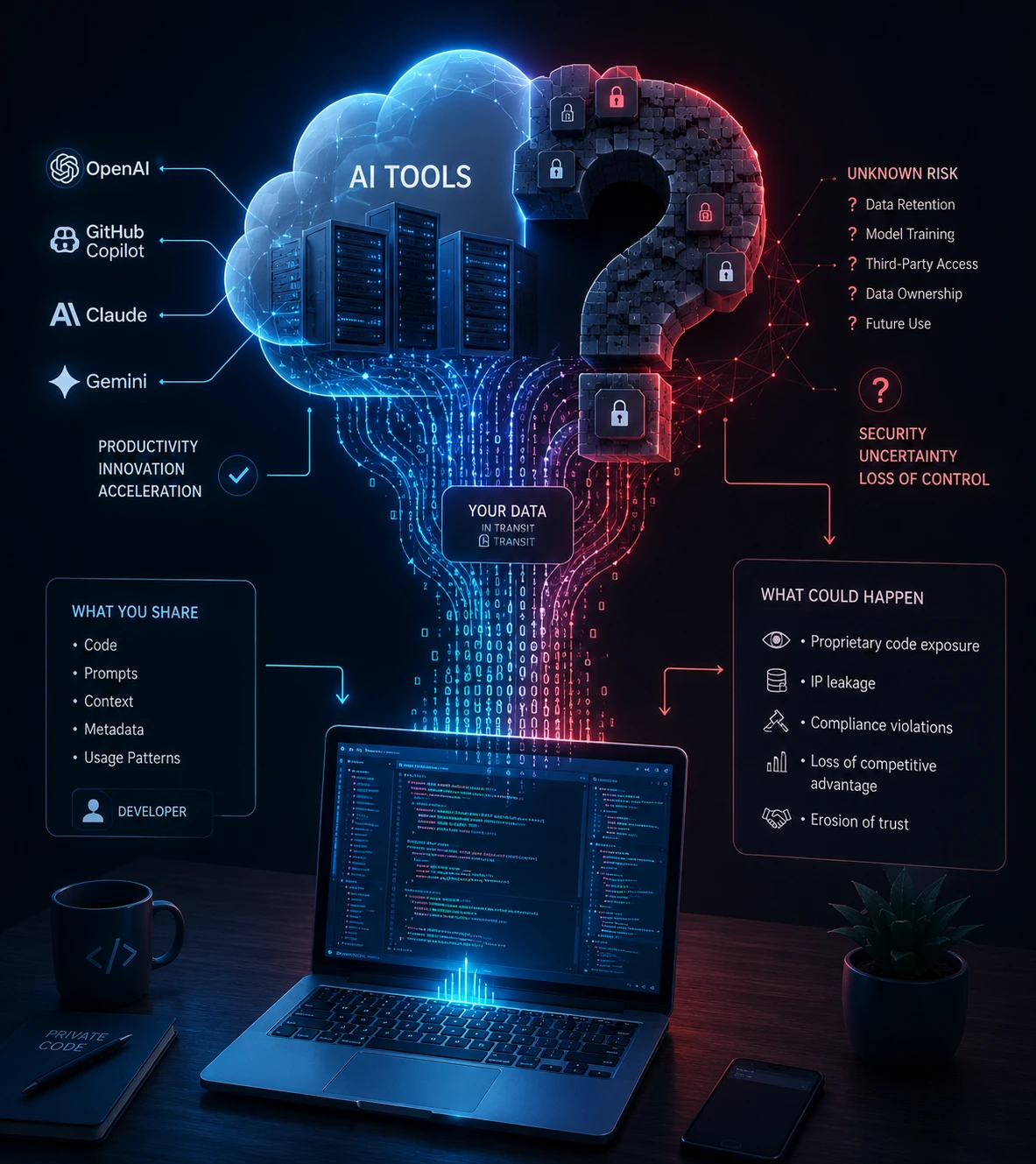
This creates a structural tension:
Developers want powerful, context-aware AI suggestions.
Powerful suggestions require sending real code to a remote model.
Sending real code to a remote model means trusting a company's data handling practices, contracts, and infrastructure.
Company ownership, leadership, and business priorities can change — through acquisitions, funding rounds, restructurings, or new partnerships.
When ownership changes, the trust chain you built your workflow on can shift underneath you, even if no single line of code in the product changes. That's exactly the situation Cursor users are in right now. Security researchers have also pointed to a structural reason AI coding assistants are inherently risky regardless of who owns them:
Simon Willison's widely cited "lethal trifecta" framework notes that any AI agent with access to private data, the ability to communicate externally, and exposure to untrusted content creates a governance problem that's nearly impossible to fully close on an uncontrolled device like a personal laptop. Ownership changes simply add a second layer of uncertainty on top of that already-difficult baseline.
Common Causes of AI Coding Assistant Privacy and Security Concerns
Several factors compound to create the kind of anxiety developers are feeling about Cursor right now. Here are the most common root causes.
1. Subprocessor and Model-Routing Changes
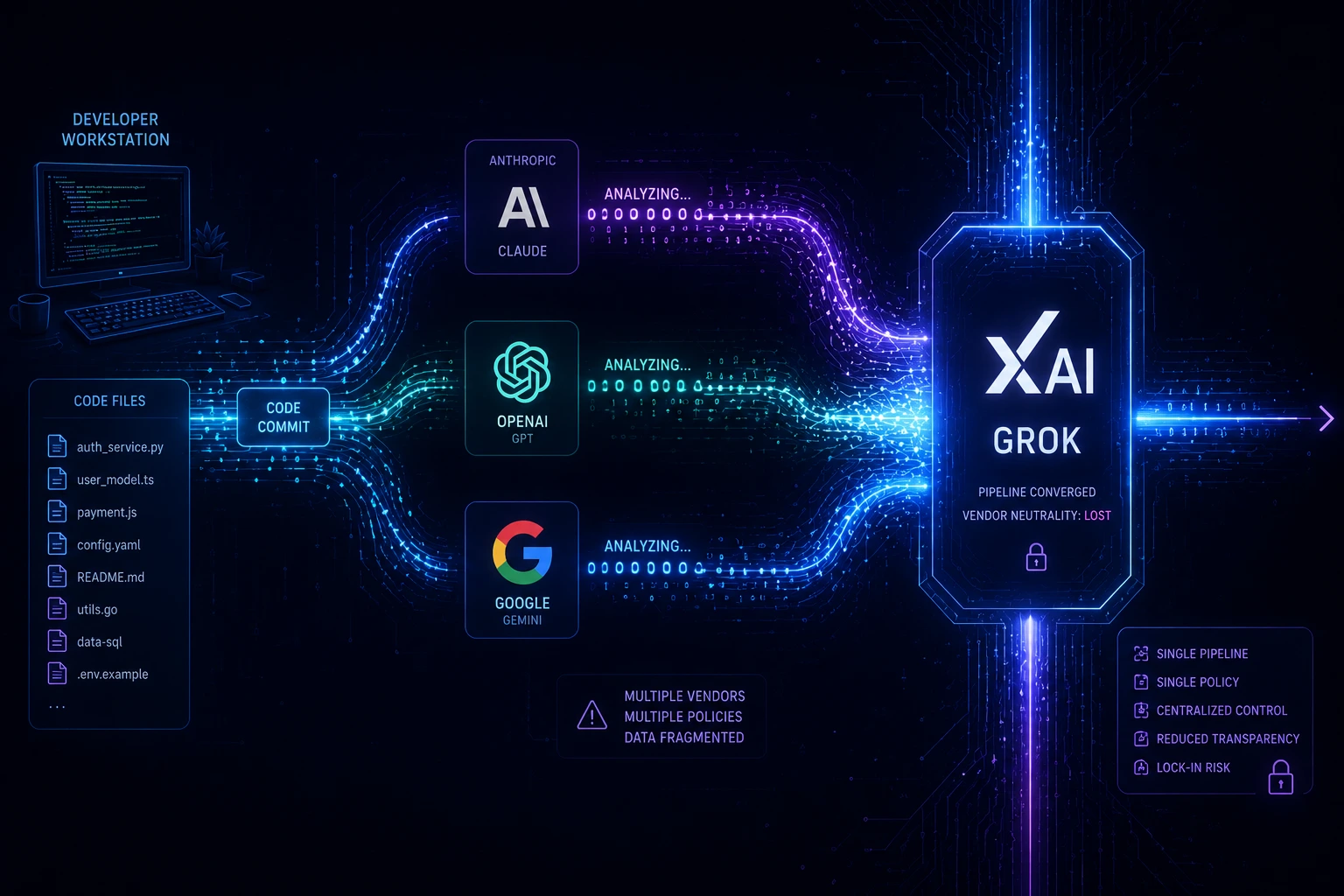
Cursor doesn't build all of its own models. Historically it has routed requests to providers like Anthropic, OpenAI, and Google, governed by contracts that include data-handling provisions like zero-data-retention and no-training-on-customer-data commitments. Deepika Giri, AVP and head of AI research at IDC Asia/Pacific, has said Cursor's existing zero-data-retention agreements with model providers like OpenAI and Anthropic could be challenged under the new SpaceX ownership, which might well renegotiate or terminate those subprocessor relationships. If that happens, the practical reality of where your code goes could shift even if Cursor's public privacy policy stays worded the same.
There's also a recent precedent that makes this concern less theoretical. According to reporting on the deal, Anthropic previously cut off API access for Windsurf, another AI coding startup, during a separate set of acquisition negotiations in 2025 — a reminder that model providers can move faster than acquirers anticipate when a competitor's ownership changes hands.
2. Model Neutrality Risk
Cursor has historically supported multiple AI model providers, letting enterprise customers choose. Giri has stated it is likely that Cursor will cease to maintain model neutrality, which would work in favor of xAI following the acquisition, adding that "for buyers looking for stack neutrality of stack, this acquisition completely takes away the neutrality that Cursor offers." If your organization specifically chose Cursor because it could route sensitive code to a provider with a strong privacy track record, a shift toward in-house or xAI models changes that calculus.
Worth noting: Cursor had already been moving in this direction before the deal closed, having built its own Composer model family (reportedly built on top of an open-weight Kimi base) after a January 2026 internal push to reduce dependence on Anthropic and OpenAI; Composer 2.5 was described as more than 85% independently developed, and a much larger Composer 3 — said to be in the same size class as Claude Opus and GPT-5.5, trained on 10–20x more compute — was teased around the same time as the acquisition announcement.
3. Unclear Data Governance During Transition Periods
Mergers and acquisitions almost always create a window where data governance is murkier than usual. Shashi Bellamkonda, principal research director at Info-Tech Research Group, has said enterprise users with sensitive codebases will want to understand exactly where their data is going, who has access to it, and whether any prompts, code, metadata, or embeddings are touching SpaceX or xAI systems.
Bellamkonda added that zero data retention is only valuable if customers believe the controls still apply across the new infrastructure, and that if data governance stays unclear, enterprise buyers will hesitate. Justin Greis, CEO of consulting firm Acceligence, made a related point: for many enterprise customers, Cursor's zero-data-retention policy wasn't simply a security feature, it was a foundational part of the procurement and approval process that got security, legal, compliance, and executive leadership comfortable with AI-assisted development in the first place — and ownership changes naturally make customers revisit those assumptions.
4. Loss of Independent Product Roadmap Control
Independent startups can iterate fast because they answer to a smaller set of priorities. A large acquirer introduces new incentives, like aligning the acquired product with the parent company's broader AI strategy. Procurement evaluations may also change shape: one analyst predicted enterprises will increasingly assess Cursor as one piece of a larger Musk-controlled AI strategy rather than as an independent vendor, which changes how due diligence and vendor risk reviews get framed.
5. Pricing Pressure After High-Multiple Acquisitions
Big acquisitions need to be justified financially. Cursor currently charges around $20 per month for individual Pro users and $40 per user per month for Business plans. Given the size of the deal, it's reasonable for developers to expect upward pricing pressure over time, since enterprise pricing pressure on acquisitions like this historically moves in one direction. Some analysts have also floated the opposite possibility:
if SpaceX's compute access lets Cursor cut its own model-serving costs, prices could eventually fall rather than rise — though this depends heavily on whether xAI's infrastructure actually delivers the cost and performance gains being promised.
6. General Confusion Between "Source Code at Rest" and "Interaction Data"
This isn't unique to Cursor, but it's a major source of confusion across the whole AI coding tool industry, and it directly affects how developers think about Cursor too. GitHub's recent Copilot privacy policy update is the clearest example: GitHub draws a distinction between code stored "at rest" in a private repository (not used for training) and "interaction data" generated while you actively use the assistant (which can be used for training on personal plans unless you opt out). Many developers don't realize this distinction exists for any AI coding tool, which causes a general, sometimes misplaced, sense of false security.
7. The "Shadow AI" Problem Inside Companies
A separate but related risk has nothing to do with who owns Cursor and everything to do with how developers actually behave. Survey data cited by Microsoft found that 78% of AI users bring their own tools to work regardless of what's officially sanctioned, and a Gartner survey found 69% of organizations either know or suspect their developers are using prohibited AI tools. Other industry data suggests developers commonly run three or more AI coding tools in parallel rather than standardizing on one.
That matters here because even if a company locks down its official Cursor contract terms after the acquisition, individual developers may keep using personal Cursor accounts, personal API keys, or other unsanctioned tools on the side — and IBM's Cost of a Data Breach research has found organizations with high levels of this kind of "shadow AI" usage face meaningfully higher costs per breach, largely due to missing access controls and visibility. Acquisition-driven uncertainty is exactly the kind of moment that pushes more usage into the shadows if companies respond with blanket bans instead of clear guidance.
Step-by-Step Solutions: Protecting Your Code Right Now
You don't need to abandon AI coding assistants to protect your codebase. You need a deliberate process. Here's a practical sequence any developer or engineering team can follow today.
Step 1: Audit What Data Actually Leaves Your Machine
Open your AI coding assistant's documentation and find the specific answer to: what gets sent to the server, and when?
For Cursor: indexing sends embeddings of your codebase to enable semantic search and chat context; completions send the surrounding code in your active file.
For GitHub Copilot: completions send roughly 50–100 lines of code around your cursor; chat sends your active conversation and referenced files.
Don't assume. Read the current documentation for your specific plan tier, because protections often differ between free, pro, and enterprise tiers.
Step 2: Turn On Privacy/Zero-Retention Settings Explicitly
Most AI coding tools have a setting that limits data retention and disables training on your code. Don't assume it's on by default, especially on personal or free tiers.
Cursor: Settings → General → Privacy Mode → ON
GitHub Copilot (personal plans): Settings → Copilot →
  "Allow GitHub to use my data for AI model training" → OFF
Step 3: Separate Sensitive Repositories From AI-Assisted Workflows
For your most sensitive codebases (authentication systems, payment processing, proprietary algorithms, anything under an NDA with a client), consider:
Disabling AI coding assistants entirely in those repositories.
Using local-only models (such as small open-weight models run on your own hardware) instead of cloud-based assistants.
Creating a separate, locked-down workspace profile with AI features disabled by default.
Step 4: Review Your Organization's Contract Language, Not Just the Marketing Page
If your company has an enterprise agreement with Cursor (or any AI coding vendor), the marketing page is not the contract. Ask your legal or procurement team to confirm:
Does the zero-data-retention clause survive a change of ownership?
Are subprocessors (the underlying model providers) named explicitly, and does the contract require notice before they change?
What happens to data already processed under the old ownership structure?
Giri's recommendation to enterprise buyers is specific and actionable here: push to lock in change-of-control clauses with 90 to 180 days' notice on any subprocessor or model-routing change before the acquisition's option window closes and the deal is finalized.
Step 5: Set Up Monitoring for Policy Changes
Vendor privacy policies change with little warning. GitHub gave only 30 days' notice before its April 2026 Copilot data policy change took effect. Build a habit, or assign a teammate, to check your AI tool vendors' privacy and terms pages on a recurring basis, especially after any acquisition, merger, or new funding round is announced.
Step 6: Use Secret-Scanning Tools as a Backstop
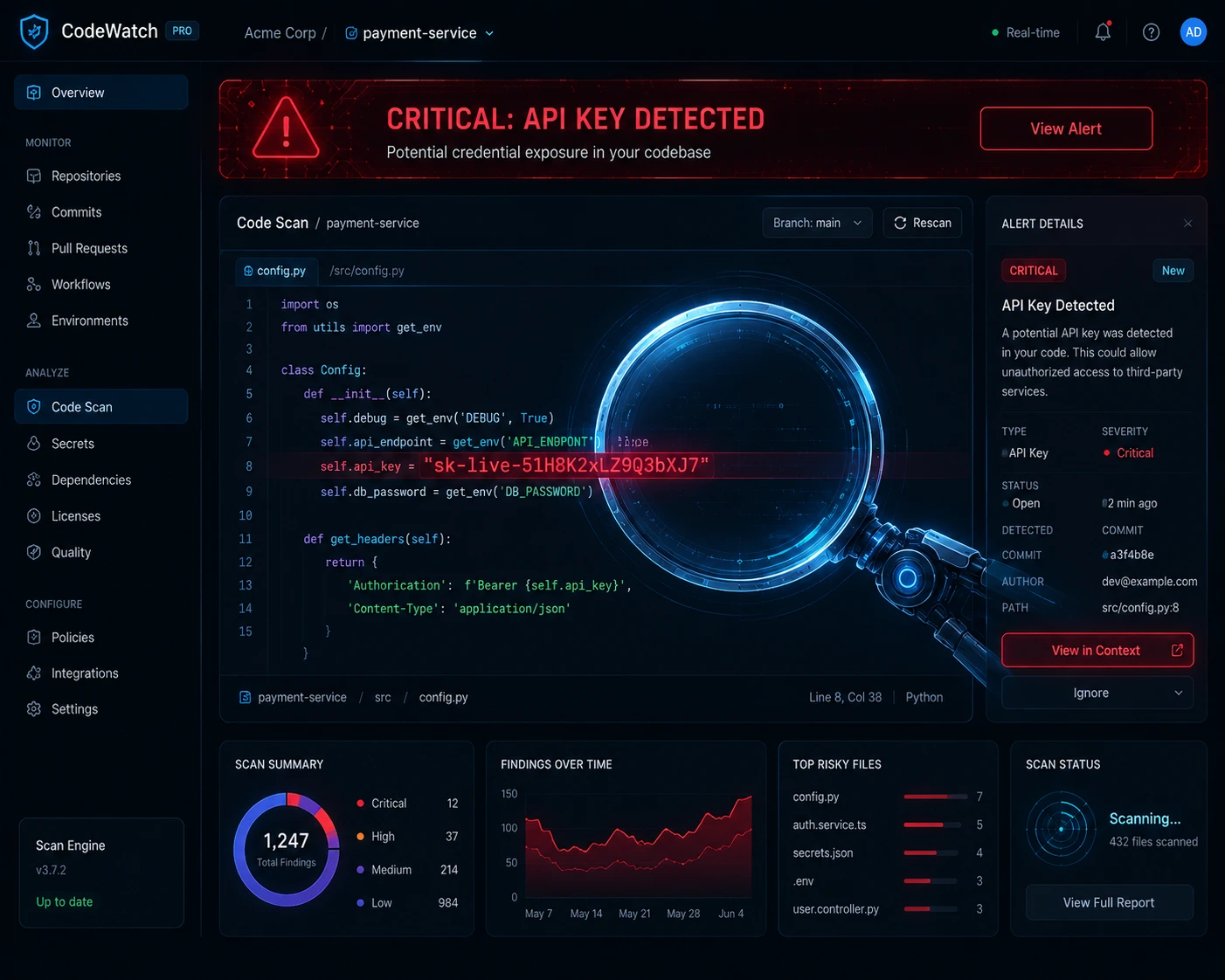
Regardless of which AI assistant you use, set up automated secret scanning (tools like GitGuardian, TruffleHog, or your Git host's built-in scanning) to catch API keys, credentials, or tokens before they're committed, since those are the highest-value secrets that could leak through any AI tool's context window.
Step 7: Document an AI Tooling Policy for Your Team
Even a one-page internal policy helps. Cover: which tools are approved, which repositories are off-limits for AI assistance, who approves new AI tool adoption, and what to do if a vendor changes ownership or terms. Given how common multi-tool usage already is among developers, a policy that pretends everyone uses a single sanctioned tool is likely to be quietly ignored; it's usually more effective to name which tools are acceptable for which kinds of repositories rather than mandating one tool company-wide.
Advanced Troubleshooting Methods for Enterprise Teams
If you're responsible for security or governance at a company with a meaningful codebase, here are deeper steps worth taking.
Map Your Actual Subprocessor Chain
Most companies don't know the full chain their code travels through. Build a simple diagram: your IDE → the AI vendor's servers → the underlying model provider(s) → any logging/analytics layer. For Cursor specifically, that chain has historically included routing to providers like Anthropic and OpenAI, which is part of why the acquisition matters: a new parent company could renegotiate which providers sit in that chain, or shift more traffic toward its own Composer and Grok-derived models over time.
Request a Data Processing Addendum (DPA) Update
After any acquisition involving a vendor you use, formally request an updated Data Processing Addendum that reflects the new corporate structure. Don't rely on a blog post or press release; insist on an updated, signed legal document.
Run a Tabletop Exercise on Vendor Ownership Change
Treat "our AI coding vendor was acquired" like any other vendor risk event. Walk through what data you sent them in the last 12 months, what your exposure is if it's mishandled under new ownership, and what your fallback tool would be if you needed to migrate quickly.
Consider Self-Hosted or Remote, Governed Infrastructure for AI Coding Tools
For the most security-sensitive parts of your stack, evaluate running AI coding assistants inside self-hosted or remote development environments you control, rather than directly on developer laptops. This addresses a problem that exists independent of which vendor you use: an AI coding agent running locally typically has direct access to private repositories, the ability to reach the open internet, and exposure to untrusted content all at once — the "lethal trifecta" described above — which makes it very hard to fully audit or contain on a laptop.
Centralizing agent execution in infrastructure you control can give you a real audit trail of what the agent did, which prompts triggered which actions, and where output went, which is often what compliance teams actually need to sign off on AI tool usage, especially in regulated industries like financial services, healthcare, or government contracting.
Build Contractual Triggers Into Future Vendor Agreements
When negotiating new AI tool contracts, require advance written notice of any acquisition or subprocessor change, with a defined right to terminate without penalty if data handling terms materially change.
Measure Tool Usage Instead of Just Mandating One Tool
Because developers routinely use more AI coding tools than any single procurement decision accounts for, security and platform teams increasingly need visibility into what's actually landing in the codebase rather than relying solely on vendor-reported usage dashboards. Independent code-analysis approaches that can detect AI-generated code regardless of which tool produced it are one way teams are starting to close this visibility gap, separate from whatever contractual assurances a vendor like Cursor provides.
Real-World Examples
Example 1: The Enterprise Buyer's Dilemma A mid-sized fintech company adopted Cursor specifically because it could configure requests to route through Anthropic's Claude models, which had an established zero-retention enterprise policy. After the SpaceX acquisition was announced, the company's security team paused new Cursor seat purchases until SpaceX clarified whether existing subprocessor agreements with Anthropic and OpenAI will continue unchanged. This is a textbook example of why enterprise teams chose Cursor specifically so they could route sensitive codebases to providers with established privacy track records, and why ownership changes ripple into procurement decisions.
Example 2: The Solo Developer Who Didn't Read the Settings A freelance developer working on a client's proprietary trading algorithm assumed Cursor's default settings were private by default. They weren't using Privacy Mode. After learning about the acquisition news, they audited their settings, enabled Privacy Mode, and asked their client for written confirmation about acceptable AI tool usage going forward — a simple fix that should have happened on day one.
Example 3: GitHub Copilot's Policy Change as a Cautionary Tale Independent of the Cursor deal, GitHub's own April 2026 policy change shows how fast terms can shift. Free, Pro, and Pro+ individual users had their interaction data opted in to training by default, while Business and Enterprise customers were excluded. The shift triggered intense backlash on developer forums. This shows that "Big Tech ownership" doesn't automatically mean stronger privacy protection for individual developers; it depends entirely on contract terms and tier.
Example 4: The Acquisition Pattern Isn't New for Cursor This isn't Cursor's first acquisition-related news. The company itself acquired code review startup Graphite in December 2025 and the talent from CRM startup Koala earlier in the year. Cursor has been an acquirer as much as it is now being acquired, which is a useful reminder that the AI coding tool market is consolidating quickly on every level, not just at the top.
Example 5: The Windsurf Precedent Before the SpaceX deal, Cursor's own leadership reportedly grew concerned after watching what happened to a different AI coding competitor, Windsurf, during its own acquisition talks: Anthropic cut off Windsurf's API access for Claude models during the negotiation period. That episode is part of why Cursor accelerated work on its own Composer models in the first place, and it's exactly the kind of scenario enterprise customers are now asking whether could happen to Cursor's own access to Anthropic and OpenAI models following the SpaceX deal.
Latest Updates (2026)
Here's what's confirmed and current as of mid-June 2026:
June 16, 2026: SpaceX formally signed an agreement to acquire Anysphere (Cursor) for $60 billion in an all-stock deal, just days after SpaceX's record-breaking IPO. The transaction will not use proceeds from the IPO itself.
Deal structure: Cursor will become a wholly owned subsidiary of SpaceX upon close, expected in Q3 2026, pending regulatory approval.
April 2026 precursor deal: SpaceX had already secured the option to buy Cursor for $60 billion (or pay $10 billion to maintain the partnership) as part of an earlier technical collaboration involving xAI's Colossus compute infrastructure, reported to include roughly a million H100-equivalent chips.
Cursor CEO statement: Michael Truell publicly framed the deal around compute access, saying the company wanted to scale up Composer, referring to Cursor's in-house AI model, calling it part of the company's path to build the best AI coding environment.
Composer 3 teased: Around the time of the acquisition announcement, details emerged of a much larger upcoming Composer 3 model, reportedly in the 1.5-trillion-plus parameter range, trained on significantly more computers than its predecessor and aimed at general intelligence beyond just coding.
Industry concern on subprocessors: Analysts at IDC and elsewhere have flagged that existing zero-data-retention agreements with Anthropic and OpenAI could be renegotiated or ended under new ownership, and that Cursor may move away from being model-neutral in favor of xAI's own models.
The Windsurf precedent looms large: Reporting on the deal has noted that Anthropic previously restricted API access for a different AI coding competitor, Windsurf, during a separate acquisition process — a key reason enterprise analysts see the zero-data-retention question as more than theoretical.
Separate but related: GitHub Copilot's April 24, 2026 privacy policy change. GitHub began using interaction data from Free, Pro, and Pro+ individual plan users for AI model training by default (opt-out), while Business and Enterprise customers remain excluded. This is unrelated to the Cursor deal but is shaping the broader "should I trust my AI coding assistant" conversation across the developer community in 2026.
Market context: Cursor's annualized revenue reportedly passed $1 billion in late 2025 and continued climbing toward the $2 billion mark by mid-2026, with more than half of the Fortune 500 among its customers.
What hasn't changed yet: As of this writing, Cursor's existing privacy policy and enterprise data terms remain in effect under Anysphere. No public announcement has confirmed changes to data handling, model routing, or pricing as a direct result of the acquisition; those questions remain open until the deal closes and SpaceX outlines its integration plans.
Best practice update for 2026: Given how quickly ownership and policy terms are shifting across the entire AI coding tool category, security teams are increasingly building "vendor ownership change" into their formal third-party risk management programs, rather than treating acquisitions as routine business news to react to after the fact.
Cursor vs. GitHub Copilot: A Privacy Comparison Table
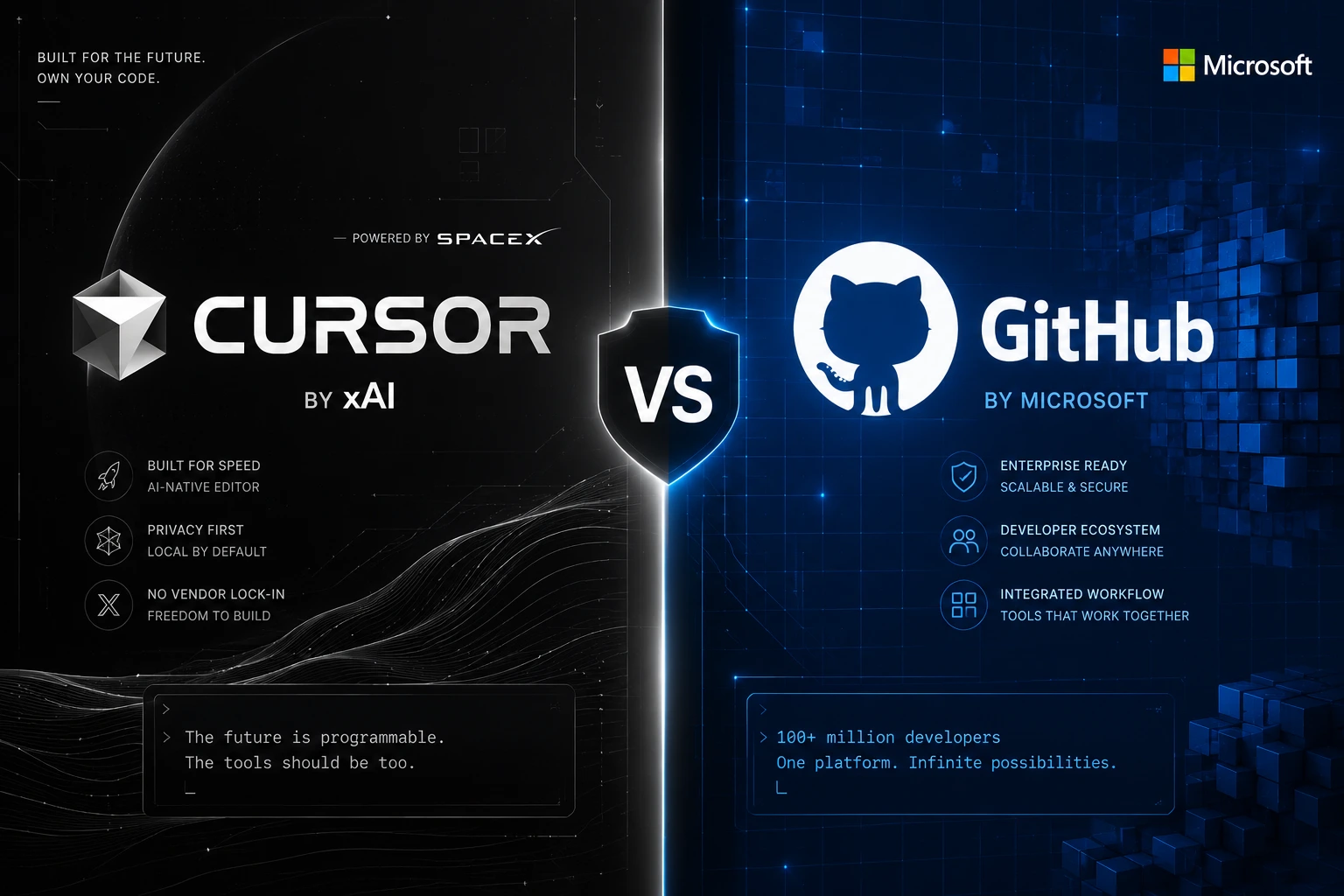
Factor | Cursor (current, pre-acquisition) | GitHub Copilot (as of April 2026) |
|---|---|---|
Ownership | Anysphere (acquisition by SpaceX pending, expected Q3 2026) | Microsoft/GitHub |
Free/Personal plan data use | Privacy Mode available, must be enabled | Interaction data used for training by default unless opted out |
Business/Enterprise plan data use | No training on customer data, per current enterprise terms | Excluded from training data collection |
Model providers | Has routed to Anthropic, OpenAI, Google, and its own Composer model; neutrality expected to narrow post-acquisition | Primarily OpenAI and Microsoft-developed models |
Codebase indexing | Local indexing, embeddings sent for semantic search | Context window sent per request, not full codebase indexing |
Recent ownership/policy change | Acquisition announced June 16, 2026 | Data policy changed April 24, 2026 |
Key open question | Will subprocessor/zero-retention terms survive new ownership, and will model neutrality continue? | Will opt-out remain the default, or will scope expand further? |
The takeaway: neither tool is automatically "safer." Both require you to actively check your specific plan tier's settings and to stay alert to policy changes, because both companies have had major ownership or policy shifts within the same few months of 2026.
Why Developers Rarely Stick to Just One Tool
It's worth being honest about how AI coding tools actually get used day to day, because it changes how much any single vendor's ownership change actually matters to your overall risk. Industry surveys have found a large share of developers running three or more AI coding tools in parallel rather than standardizing on one:
Copilot for quick inline completions, Cursor (or a similar IDE-native tool) for flow-state multi-file editing, and a terminal-native agent like Claude Code or OpenAI's Codex for more autonomous, multi-step tasks. These tools increasingly serve different jobs rather than competing head-to-head for the same one.
That fragmentation cuts both ways for security. On one hand, it means no single acquisition can fully control how your team's code reaches AI systems, since developers will route around restrictions they don't like. On the other hand, it means a privacy or governance policy written around "our approved tool" is incomplete if it ignores the other tools developers are already using on the side.
The practical implication: don't treat the Cursor acquisition as a reason to evaluate Cursor in isolation. Evaluate your entire AI tooling footprint, sanctioned and unsanctioned, at the same time.
Troubleshooting Checklist
Use this as a quick reference whenever a vendor you depend on changes ownership, raises funding, or updates its terms.
Confirm which plan tier you're on (free, personal pro, business, enterprise)
Locate and enable any "Privacy Mode" or "do not train on my data" setting
Identify which underlying AI model provider your requests route through
Check whether your organization has a signed Data Processing Addendum (DPA)
Ask procurement/legal whether the DPA includes change-of-control notice requirements (push for 90–180 days)
Review your most sensitive repositories and confirm whether AI assistance is appropriate there
Set up or verify automated secret-scanning on all repositories
Document your team's AI tooling policy in a shared, accessible location, accounting for tools developers use informally
Subscribe to or bookmark your AI vendor's official changelog/blog for policy updates
Calendar a recurring review (quarterly is reasonable) of your AI tool vendor risk
When to Contact Support (or Legal/Security)
Reach out beyond your own troubleshooting when:
Your organization has a signed enterprise contract with Cursor and you need written confirmation about how the SpaceX acquisition affects your specific data terms. Contact Cursor's enterprise support or your account representative directly, and ask for it in writing.
You discover that a secret, credential, or proprietary algorithm may have already been sent through an AI assistant without your organization's approval. This is a security incident, not a settings issue, and should go to your security team immediately, not just a configuration fix.
Your company operates in a regulated industry (finance, healthcare, defense, government) and needs to confirm compliance obligations are still met under any new vendor ownership structure. This requires your compliance or legal team, not a help desk ticket.
You're unsure whether your current contract automatically renews or transfers under the new ownership structure once the acquisition closes. Procurement and legal should review the assignment clause in your contract.
You manage a team and need a vendor risk assessment before deciding whether to continue, pause, or migrate away from a tool following an ownership change. This is a security/IT governance decision, not something to decide informally.
FAQ
As of mid-2026, Cursor's existing privacy terms under Anysphere remain in effect, including Privacy Mode and no-training commitments on enterprise plans. Safety depends on your specific settings and plan tier, not just the brand name. Enable Privacy Mode and confirm your plan's data handling terms before assuming it's automatically safe for sensitive code.
Nothing has changed in the product yet. The deal was announced June 16, 2026, and is expected to close in Q3 2026, pending regulatory approval. Until then, Cursor continues to operate under its existing privacy policy and enterprise terms. The open questions are about what happens after the deal closes, particularly around subprocessor relationships and model neutrality.
Trust should be conditional and tool-specific, not blanket. Read the actual privacy policy for your specific plan tier, confirm whether training-on-your-data is opt-in or opt-out, and reassess that trust whenever the vendor changes ownership, raises major funding, or updates its terms, as both Cursor and GitHub Copilot have in 2026.
Cursor offers a Privacy Mode toggle and has routed requests to multiple model providers including Anthropic and OpenAI, with no-training commitments on enterprise plans, though analysts expect model neutrality to narrow after the SpaceX deal closes. GitHub Copilot, as of April 24, 2026, uses interaction data from Free, Pro, and Pro+ individual plans for training by default unless you opt out, while Business and Enterprise plans remain excluded. Neither is universally "more private"; it depends on your specific plan and settings.
Generally, no, not in one shot. Most tools, including Cursor and Copilot, send relevant context (surrounding code, specific files, or codebase embeddings for semantic search) rather than uploading an entire repository at once. However, over time and many requests, a meaningful portion of a codebase can pass through a vendor's servers, which is why retention and training policies matter more than any single request.
There's no official pricing announcement yet. Large acquisitions at high valuations historically create pressure toward price increases over time, since the acquirer needs to justify the investment. That said, some analysts have suggested SpaceX's compute access could eventually lower Cursor's own model-serving costs, which could theoretically ease pricing pressure rather than add to it. It's reasonable for individual and enterprise users to budget for either outcome.
Zero data retention means a vendor doesn't store your code or prompts after processing your request, and doesn't use them for training. It matters here because Cursor's enterprise contracts include these commitments with model providers like Anthropic and OpenAI, and analysts have raised the possibility that SpaceX could renegotiate or end those specific subprocessor agreements after the acquisition closes — a concern reinforced by the precedent of Anthropic restricting a different competitor's model access during a separate acquisition process in 2025.
Yes. Self-hosted or on-premises AI coding tools that run open-weight models entirely within your own infrastructure avoid sending code to any third party. A related approach gaining traction in enterprises is running cloud-based AI coding tools like Cursor inside self-hosted, governed remote development environments rather than directly on developer laptops, which gives security teams an audit trail and access controls without giving up the underlying AI model's capability. Both approaches typically require more setup and may add friction compared to using a cloud tool directly on your laptop, but they meaningfully reduce subprocessor and ownership-change risk for your most sensitive code.
Ask your procurement or legal team to review your existing contract's "assignment" and "change of control" clauses, and request written confirmation from Cursor's enterprise team once the deal closes about whether your specific data-handling terms remain unchanged. Analysts recommend pushing for 90–180 days' advance notice on any future subprocessor or model-routing changes.
Open-source contributors using Cursor's free or personal tiers should review the same settings as any individual user, particularly Privacy Mode and training opt-outs. Since open-source code is already public, the bigger concern for these users is usually unrelated proprietary work mixed into the same workspace, not the open-source code itself.
Different tools tend to serve different working styles: inline-completion tools like Copilot for quick suggestions while typing, IDE-native tools like Cursor for multi-file editing and "flow," and terminal-native agents like Claude Code or Codex for autonomous, multi-step tasks. Industry surveys suggest a majority of regular AI tool users run several of these in parallel rather than picking just one, which is part of why company-wide policies built around a single "approved" tool often have limited real-world effect.
Conclusion
The Cursor acquisition by SpaceX is one of the largest deals in AI developer tooling history, and it's a useful wake-up call rather than a reason to panic. Cursor's existing source code privacy protections, including Privacy Mode and enterprise no-training commitments, remain in place as of this writing, and the deal hasn't closed yet.
But the questions developers are asking right now, about subprocessor relationships, model neutrality, pricing, and roadmap independence, are exactly the right questions to ask any time an AI coding assistant changes hands — and they're being echoed by industry analysts at firms like IDC and Info-Tech Research Group, not just nervous developer forum threads.
The bigger lesson goes beyond Cursor. Code security and developer data security shouldn't depend on blind trust in a brand name. They should depend on understanding your specific settings, your specific contract terms, and your specific exposure, and revisiting all three whenever ownership changes. It's also worth remembering that most developers already spread their work across several AI tools rather than relying on just one, so a full risk picture has to look past whichever tool is in the headlines this week.
Whether you stick with Cursor, switch to GitHub Copilot, or explore self-hosted or governed remote-development alternatives, the practical checklist in this article works the same way: audit what leaves your machine, enable the privacy controls that exist, separate your most sensitive code from AI workflows when in doubt, and build a habit of checking vendor policy changes instead of assuming yesterday's terms still apply today.
As the AI coding assistant market keeps consolidating in 2026, the developers and teams who come out ahead won't be the ones who avoided AI tools entirely. They'll be the ones who treated every acquisition, every policy update, and every new partnership as a normal, expected part of using AI coding tools responsibly, and adjusted their practices accordingly.