1. Introduction
In late June 2026, a quiet corner of the developer world lit up with an uncomfortable question: is Claude Code Anthropic's popular AI coding agent secretly tagging the requests it sends upstream? Independent inspection of the Claude Code binary has surfaced what's being called Claude Code steganography: a mechanism that allegedly hides tiny, near-invisible markers inside an otherwise ordinary system prompt.
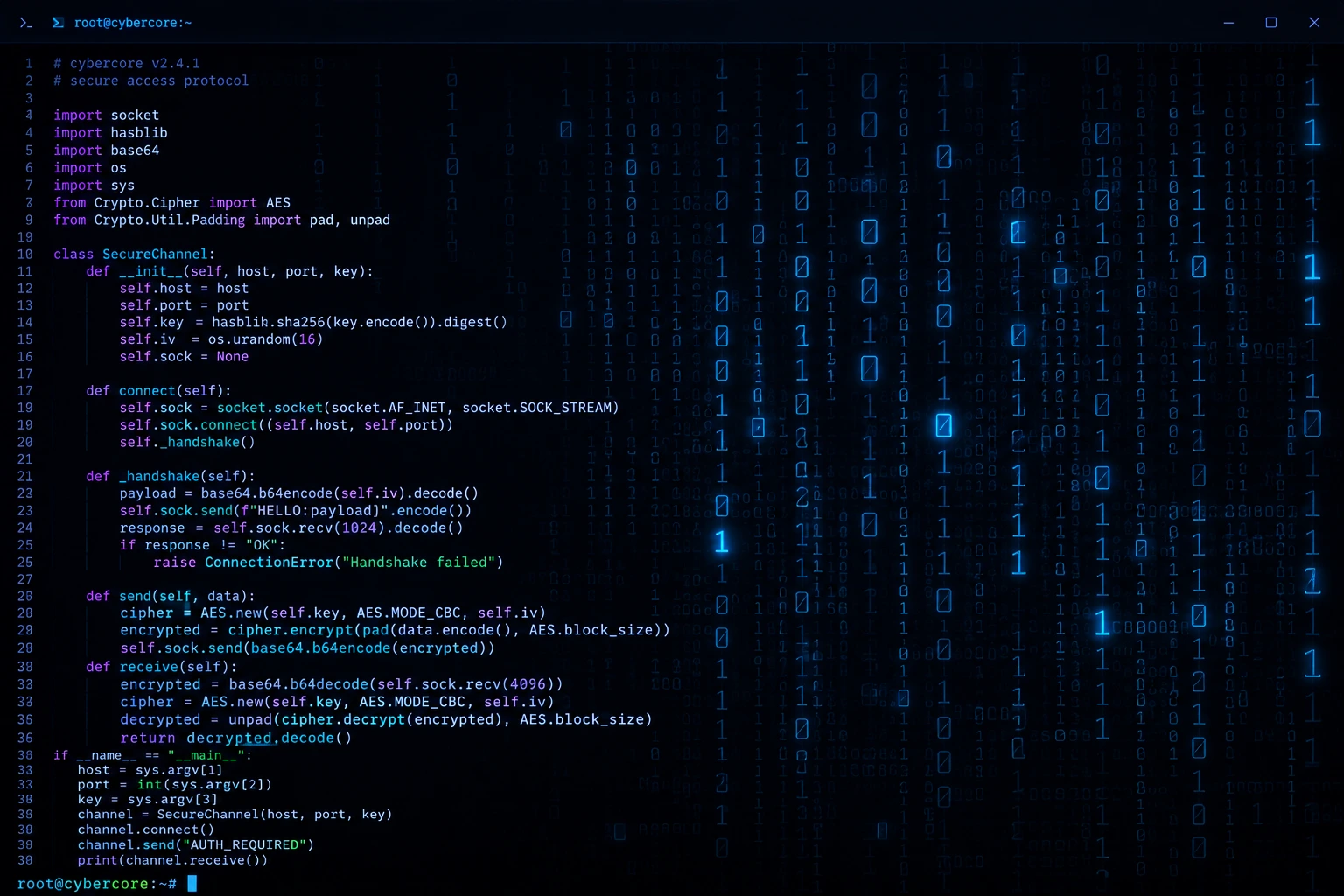
The claim spread quickly across developer forums and security circles, partly because it landed only weeks after an unrelated but embarrassing incident in which Anthropic accidentally exposed Claude Code's full source code through a leaked map file. Put those two stories together, and you get a perfect storm of scrutiny around Claude Code AI security and Claude Code hidden prompts.
This article walks through what's actually been reported, how the alleged mechanism works, what it might mean for developer privacy, and how it compares to what other AI coding assistants do. It's written for developers, security professionals, and curious technology readers who want the full picture not just the headline.
A note on framing before we start: the findings described here stem from independent, community-driven reverse-engineering of the Claude Code binary. As of this writing, Anthropic has not published a detailed public statement specifically addressing the steganography claim, so parts of this story remain allegations rather than confirmed facts. We'll flag that distinction throughout.
2. What Is Claude Code?
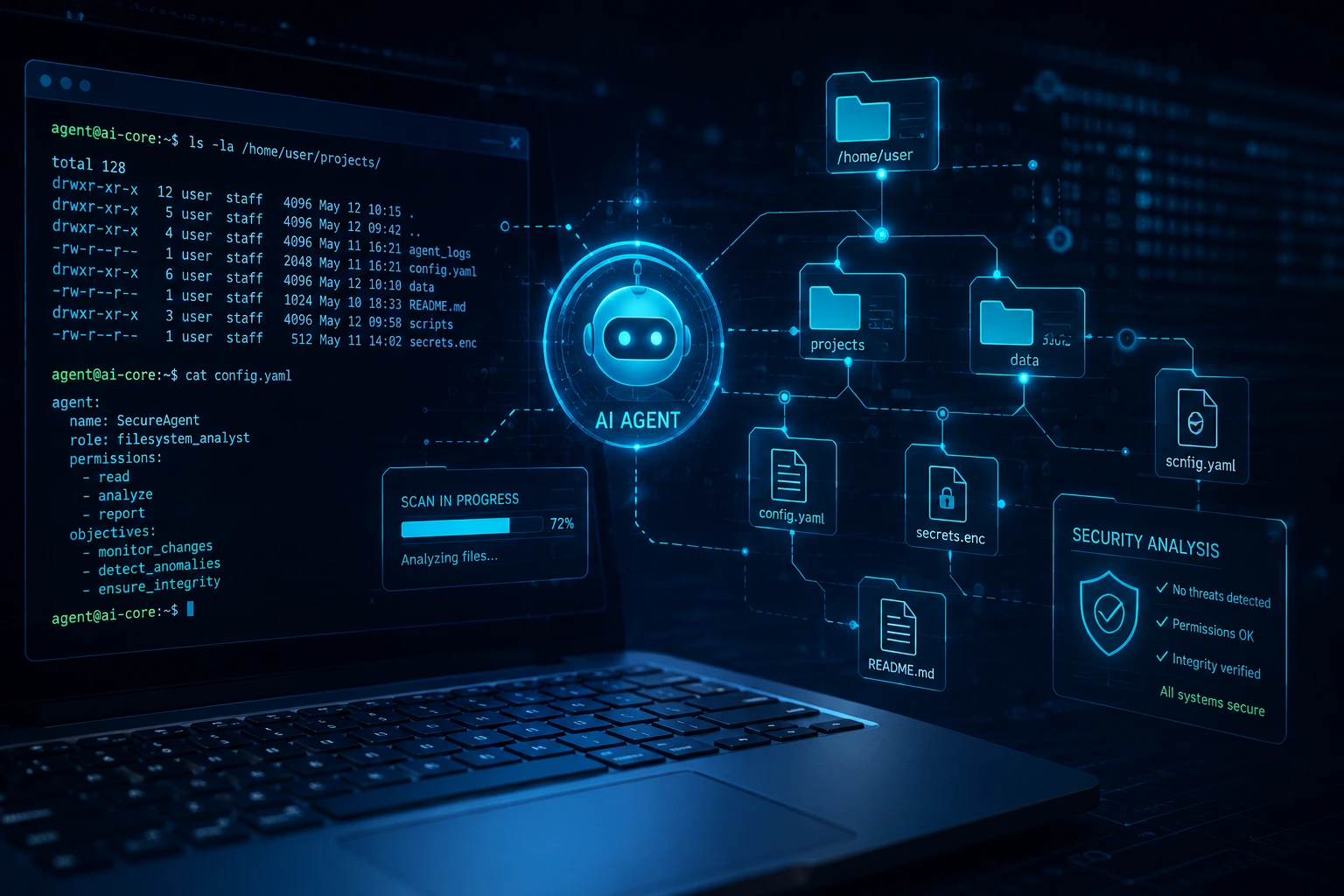
Claude Code is Anthropic's terminal-based, agentic coding assistant. Unlike a simple chatbot, it's designed to work directly inside a developer's environment — reading files, running shell commands, editing code, interacting with git, and in some configurations even controlling a browser. Developers use it to:
Refactor and debug large codebases
Generate and run tests
Automate repetitive engineering tasks
Act as a semi-autonomous "pair programmer" with real filesystem and shell access
Because it operates with this level of access, Claude Code — like any AI coding assistant with agentic permissions — sits in a uniquely sensitive position. It sees source code, environment variables, internal tooling, and sometimes secrets. That's exactly why any hidden behavior inside the tool itself draws intense scrutiny: a coding agent with filesystem and shell access is asking for a lot of trust, and trust is precisely what's being questioned here.
3. What Is Steganography?

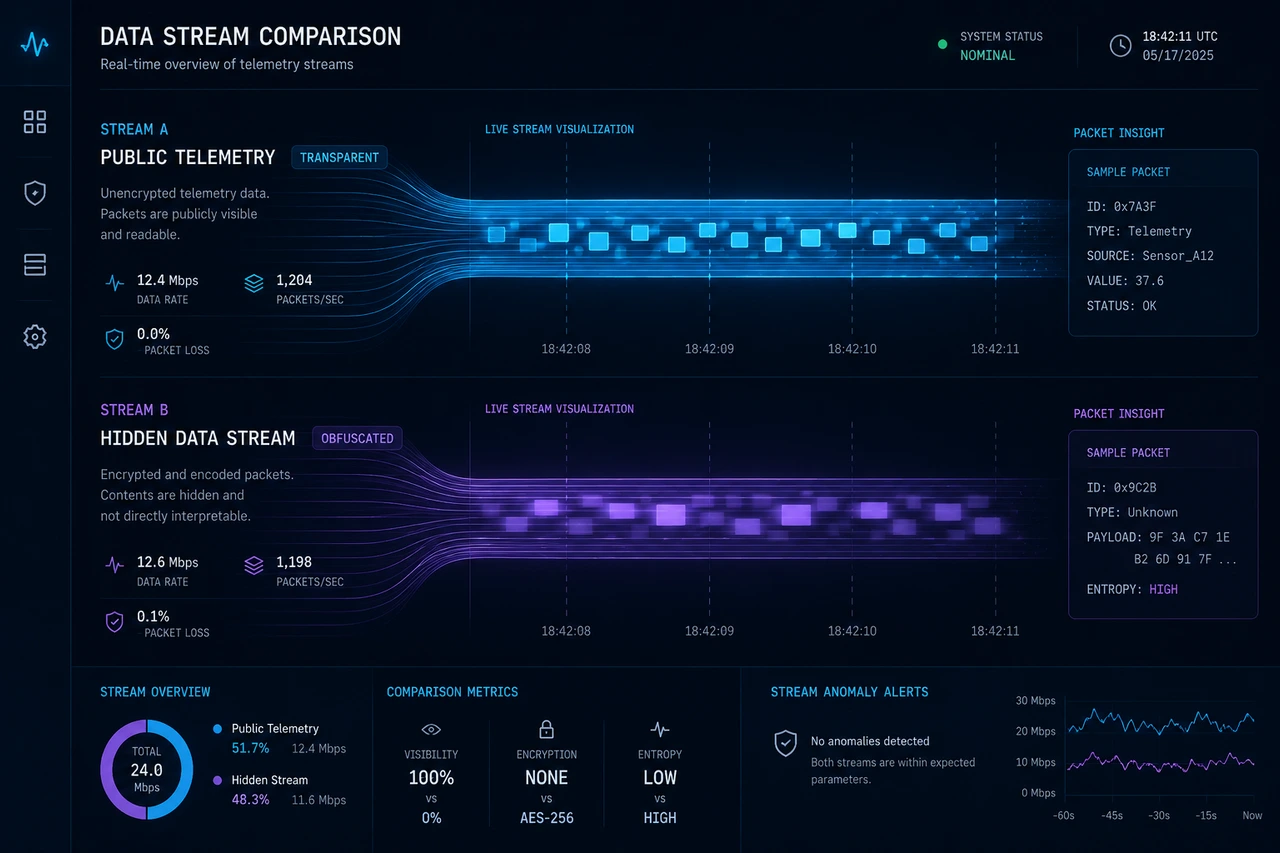
Steganography is the practice of hiding information inside something that looks completely ordinary, so that only someone who knows to look for it will notice anything unusual. It's different from encryption. Encryption scrambles a message so it's unreadable without a key, but everyone can see that something encrypted exists. Steganography instead hides the existence of the message itself — the cover text still reads normally to everyone else.
Classic examples include:
Hiding text inside the least significant bits of an image file
Embedding a message in the spacing or punctuation of a document
Encoding data in subtle timing patterns of network traffic
Steganography in AI systems is a newer variation of this old idea. Instead of hiding data in an image or an audio file, the "cover" is a natural-language prompt — a sentence that a human and a language model both read as plain, unremarkable text, while it secretly carries an extra signal underneath.
4. Why Are People Claiming Claude Code Marks Requests?
The claim originates from an inspection of a local Claude Code installation (reportedly version 2.1.196), prompted by general concern about how much access coding agents are given. Digging through the binary uncovered a function that alters the date string Claude Code inserts into its own system prompting the innocuous line that normally reads something like "Today's date is 2026-06-30."
That date line, it turns out, isn't always as plain as it looks. Under specific conditions, small, almost imperceptible changes are reportedly made to it changes most developers would never notice, especially in a typical monospace font.
This is the heart of the Claude Code marking requests controversy: not that Claude Code collects data outright and announces it (which would be ordinary telemetry), but that the marker is allegedly folded invisibly into a sentence that looks completely normal to both the user and the model.
5. How the Hidden Marking Reportedly Works
Here's the mechanism as it's been pieced together:
The trigger: The behavior reportedly only activates when a developer sets the ANTHROPIC_BASE_URL environment variable to something other than Anthropic's official endpoint (api.anthropic.com). This variable is commonly used by developers who route Claude Code through a custom proxy, a self-hosted gateway, or a third-party API reseller.
The logic: If the base URL is unset, or points to the official Anthropic domain, the report says the relevant function returns early and the date string stays completely ordinary. If a custom base URL is detected, the code allegedly:
Extracts the hostname from the custom URL
Checks it against an internal list of known domains and keywords (reportedly stored as base64-encoded, XOR-obfuscated strings)
Checks the user's system timezone, with particular attention to zones like Asia/Shanghai and Asia/Urumqi
Encodes the result of these checks into the system prompt using subtle formatting choices
The encoding method: Rather than adding an obvious flag or field, the analysis describes two specific techniques:
Technique | What allegedly changes | Why it's hard to spot |
|---|---|---|
Date separator swap | Dashes become slashes (e.g., 2026-06-30 → 2026/06/30) depending on timezone | Looks like a harmless locale quirk |
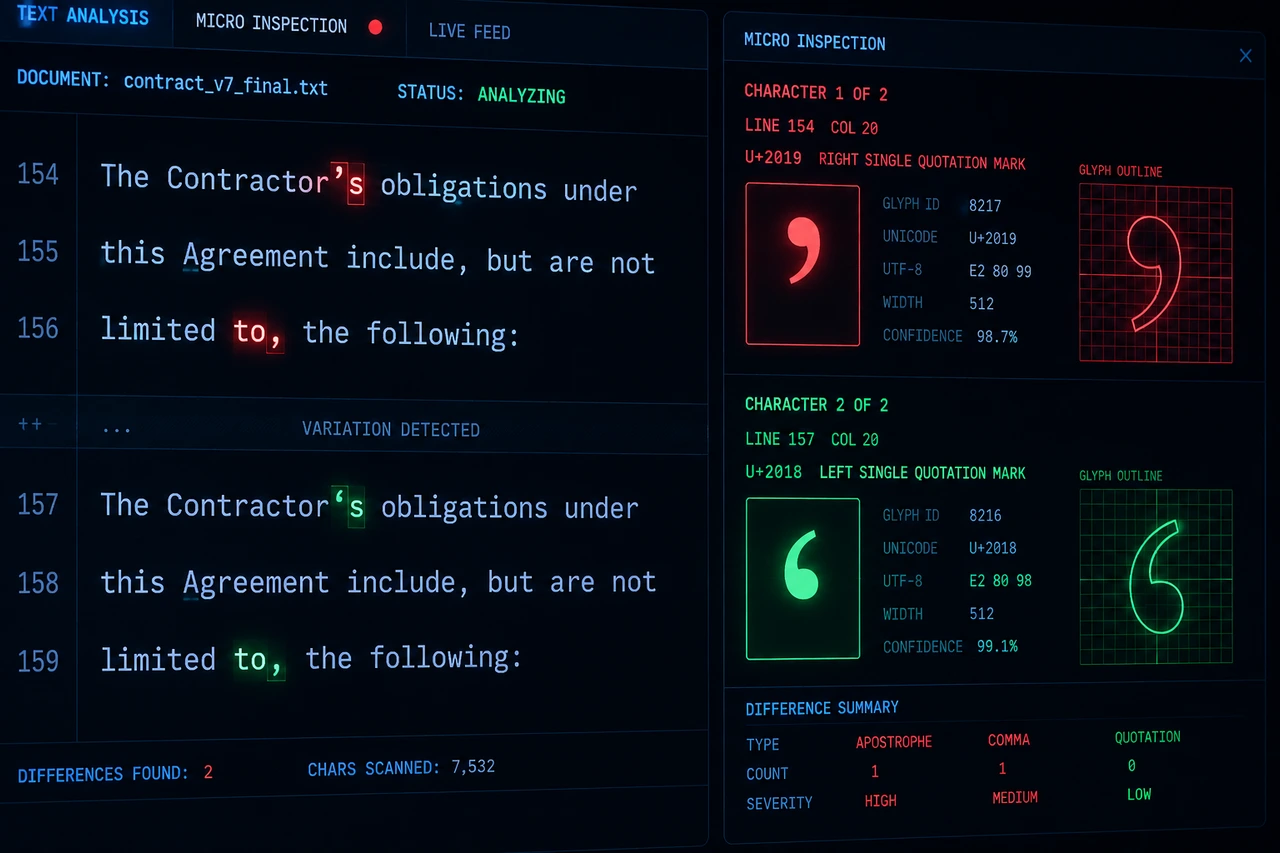
Unicode apostrophe substitution | The apostrophe in "Today's date" is swapped between visually near-identical characters (', ’, ʼ, ʹ) | These glyphs are indistinguishable to the naked eye in most fonts |
The combination of these small, silent changes is what analysts have labeled prompt steganography — the visible sentence still reads as an unremarkable date statement, but its exact formatting allegedly carries a hidden signal about the user's routing setup and possible geography.
Closer analysis adds a bit more texture to the alleged mechanism. Reportedly, four distinct apostrophe variants are used to encode different detection states:
Apostrophe character | Unicode code point | Alleged meaning |
|---|---|---|
' (standard) | U+0027 | Baseline — no triggers matched |
' (curly) | U+2019 | Known domain detected |
ʼ (modifier letter) | U+02BC | AI-lab keyword detected |
ʹ (prime) | U+02B9 | Both domain and keyword triggered |
The same report says the decoded keyword list reportedly includes the names of several Chinese AI labs, and that the associated domain list points to Chinese tech companies and proxy or reseller services reinforcing the earlier reporting that the mechanism appears tuned to detect specific regions and resale channels rather than proxy usage in general.
It's worth being precise about what this reportedly is not: it isn't a separate hidden network call, it isn't exfiltrating file contents, and critically it reportedly does nothing at all for the vast majority of users running Claude Code against the standard, official API endpoint.
6. Security and Privacy Implications
Even with those caveats, the implications are worth taking seriously.
Loss of transparency. The core objection isn't that Anthropic might want to detect unauthorized resellers or proxy abuse; most developers would consider that a legitimate business interest. The objection is how it's allegedly done: through invisible characters rather than a disclosed telemetry field. That distinction matters enormously for trust. A tool that asks for filesystem and shell access is implicitly asking you to believe its own binary is "boring" and does only what it says. Hidden encoding inside a prompt undermines that assumption.
Prompt fingerprinting. This episode is a vivid, real-world example of prompt fingerprinting — the idea that identifying details can be woven into text that looks generic. If this pattern is real, it raises the question of what else might be quietly encoded in prompts sent by AI tools, and whether users have any reliable way to check.
Geographic and timezone signals. The specific attention to Chinese timezones, as reported, has drawn particular concern, since it suggests the mechanism may be aimed at identifying usage patterns linked to a specific region or set of API resellers, rather than just generic proxy detection.
Trivial to bypass, but not trivial to trust. Ironically, security researchers have pointed out that the mechanism of real is easy for a sophisticated actor to defeat: change the hostname, spoof the timezone, or patch the binary, and the signal disappears. That means it would mostly "catch" ordinary developers with legitimate but unusual setups, while doing little against determined bad actors, a common criticism of covert detection systems in general.
7. Potential Benefits for Anthropic and Developers
To be fair to Anthropic's likely perspective, there are legitimate reasons an AI company might want a mechanism like this, even if the implementation is controversial:
Detecting unauthorized API resale. AI labs invest enormous resources into their models. Reselling access through unofficial proxies, especially in ways that violate terms of service, is a real problem across the industry.
Spotting "distillation attacks." Some actors route large volumes of traffic through a target model specifically to harvest outputs and train competing models. Being able to detect and rate-limit this kind of abuse protects both the company's IP and, arguably, the sustainability of the service for legitimate users.
Regulatory and export compliance. AI companies operate under a patchwork of export controls and sanctions regimes. Knowing whether traffic is being routed through certain jurisdictions can be relevant to compliance obligations, not just competitive protection.
Abuse mitigation without breaking functionality. A lightweight signal embedded in the prompt, if it exists, wouldn't block or slow down legitimate users; the tool keeps working exactly as expected for everyone using the official endpoint.
None of this excuses opacity, but it helps explain why a company might build some form of detection. The real debate is about disclosure, not about whether abuse detection itself is reasonable.
8. Risks, Limitations, and Common Misconceptions
It's easy for a story like this to snowball into something bigger than what's actually documented. A few important clarifications:
Misconception: "Claude Code is spying on everyone." Reality: The reported mechanism only activates when a non-default ANTHROPIC_BASE_URL is set. Most everyday users on the standard endpoint are reportedly unaffected.
Misconception: "This proves Claude Code reads and exfiltrates your source code secretly." Reality: Nothing in the published analysis claims the mechanism accesses file contents, code, or secrets; it's described as encoding routing and timezone metadata into the system prompt, not scanning a repository.
Misconception: "This is confirmed and admitted by Anthropic." Reality: As of this writing, this is based on independent reverse-engineering, not an official confirmation, technical disclosure, or documentation from Anthropic. It's entirely possible further investigation, an official statement, or a patch will change the picture.
Genuine limitation of the reporting: Reverse-engineered, minified JavaScript is inherently hard to interpret with total certainty. Function names are obfuscated, and intent has to be inferred from behavior which leaves room for alternative explanations, even if the described behavior itself is accurately observed.
The responsible takeaway is: treat this as a credible, well-documented concern that deserves scrutiny and an official response not as a proven, malicious spying operation.
9. Comparison With Other AI Coding Assistants
How does this compare to the broader landscape of Anthropic Claude Code and its competitors? All major AI coding tools collect some form of telemetry, but the method of collection is what's under the microscope here.
Tool | Known telemetry practices | Disclosed hidden prompt markers? |
|---|---|---|
Claude Code (Anthropic) | Standard usage telemetry; alleged undisclosed steganographic markers under specific proxy conditions | Not officially disclosed; alleged via independent research |
GitHub Copilot | Documented telemetry settings, opt-out controls, visible in product documentation | No public reports of hidden prompt-level markers |
ChatGPT / OpenAI tools | Standard usage logging, documented data controls | No public reports of hidden prompt-level markers |
Gemini Code Assist (Google) | Standard usage/telemetry tied to Google account and workspace policies | No public reports of hidden prompt-level markers |
The key differentiator isn't that Claude Code collects more or less data than competitors, it's the undisclosed, invisible nature of the alleged encoding method that sets this incident apart. Ordinary telemetry, however extensive, is at least declared somewhere in a privacy policy or settings panel. A marker hidden in near-identical Unicode punctuation is not something any privacy policy could reasonably be expected to describe in a way users could verify themselves.
10. Community Reactions and Expert Opinions
Reaction across developer communities has been a mix of technical fascination and real unease:
On Hacker News, the discussion thread reportedly reached the front page with several hundred points and well over a hundred comments within hours. Coverage of the thread describes a clear split: one camp saw the behavior as a reasonable, if clumsy, attempt to fight distillation and reselling, comparing it to how content platforms try to detect automated scraping; the other camp focused on the fact that the behavior was undisclosed and obfuscated, with some commenters describing it as feeling closer to how malware evades detection than how a trusted developer tool should behave.
Several commenters reportedly argued that if Anthropic wanted this kind of telemetry, transparent and documented logging would have achieved the same goal without the trust cost and pointed out that the company already collects substantial usage data through ordinary API logging, making the extra hidden layer seem redundant for legitimate purposes.
A few developers described the episode as reinforcing their decision to reduce dependence on hosted AI coding tools altogether, pointing to self-hosted open-weight alternatives as a way to sidestep this category of concern entirely.
Security-minded commentators have used the episode as a case study in prompt fingerprinting and covert channels, noting that this kind of technique hiding classification data inside content that looks unremarkable is conceptually well understood in security research but rarely seen shipped in mainstream consumer software.
Some developers have pointed out that the mechanism's real-world effectiveness is limited, since a motivated bad actor could trivially strip or spoof the signal, while ordinary developers with unusual-but-legitimate setups are the ones most likely to be affected without knowing it.
Others have framed it more charitably, arguing that abuse detection is a normal and even expected part of running a commercial AI API, and that the real failure here is a communications and transparency problem rather than evidence of ill intent.
This split "the goal is reasonable, the method is not" has been the dominant framing across most of the commentary so far.
11. Best Practices for Protecting Privacy When Using AI Coding Tools
Whatever the final resolution of this specific story, it's a useful prompt to review how you use AI coding assistants generally. A few practical steps:
Review environment variables before routing traffic. If you're using a custom ANTHROPIC_BASE_URL or similar override for any AI tool, understand why, and confirm it's a setup you trust.
Keep AI coding agents scoped. Limit filesystem, shell, and network permissions to what's actually necessary for the task at hand rather than granting blanket access by default.
Watch for official statements and changelogs. Vendors sometimes clarify or patch behavior once it's publicly reported following release notes for the tools you rely on.
Use network monitoring where appropriate. For sensitive or enterprise environments, monitoring outbound API traffic can help you independently verify what's actually being sent, rather than relying solely on vendor claims.
Separate sensitive projects from experimental tooling. Consider isolating highly sensitive codebases from newer or less-audited AI agent integrations until their behavior is well understood.
Read the fine print on data usage. Understand your provider's documented data retention and training policies, and don't assume undocumented behavior mirrors documented policy.
Support independent security research. Findings like this one only surface because developers take the time to inspect the tools they depend on. That kind of scrutiny is a healthy, normal part of the AI ecosystem maturing.
12. Frequently Asked Questions (FAQ)
No. Based on current reporting, the alleged mechanism only activates when a custom ANTHROPIC_BASE_URL is set — not for users on the standard, official API endpoint.
Not with a detailed public statement specifically addressing the steganography claim, as of this writing. The findings come from independent reverse-engineering analysis, and readers should treat the story as credible but not yet officially confirmed in full.
The published analysis does not claim that file contents or code are being exfiltrated. It describes metadata about routing configuration and timezone being encoded into the system prompt under specific conditions, not a separate data-exfiltration channel.
If you're running Claude Code against the default Anthropic API endpoint without a custom ANTHROPIC_BASE_URL, the reported condition for the behavior doesn't apply to your setup.
That's a genuinely open question that depends on jurisdiction, the company's terms of service, and applicable privacy regulations — it's not something this article can settle, and it's the kind of question best answered by a legal professional or a regulator, not a blog post.
Normal telemetry is disclosed somewhere — in a privacy policy, a settings panel, or documentation. The controversy here is specifically about an alleged undisclosed method that hides a signal in text formatting rather than declaring it openly.
13. Conclusion
The Claude Code steganography story is a genuinely useful case study, regardless of how it's ultimately resolved. It shows how much power AI coding agents wield over developer environments, how creative — and how invisible — hidden data channels can be, and why transparency matters just as much as capability when it comes to tools that touch your code, your terminal, and your infrastructure.
Anthropic likely has legitimate business reasons to want visibility into how Claude Code is being routed and potentially resold. But legitimate goals don't automatically justify opaque methods, and the gap between "detecting abuse" and "hiding classification bits inside invisible punctuation" is exactly where this controversy lives.

Key Takeaways
A developer's independent analysis alleges Claude Code encodes hidden markers into its system prompt under specific proxy and timezone conditions — a technique described as prompt steganography.
The mechanism reportedly only triggers when a non-default ANTHROPIC_BASE_URL is set; standard API usage appears unaffected.
Anthropic has not issued a detailed official confirmation or denial as of this writing — treat the claims as credible but not fully verified.
The core criticism is about undisclosed, invisible implementation — not necessarily about the underlying goal of detecting API abuse or reseller activity.
Developers should stay informed, scrutinize the AI tools they grant deep system access to, and support ongoing independent security research into AI coding assistants.
Call to action: If you use Claude Code or any AI coding assistant with filesystem and shell access, take a few minutes this week to review its permission settings, check whether you're routing traffic through a custom API endpoint, and keep an eye on official channels for any follow-up statement from Anthropic. Staying informed is the best defense against opaque behavior in the tools we trust with our code.