I spent 40 hours last week trying to solve a single question: how do you consistently tell if AI-generated content is actually good? Not "does it sound okay." Not "does it pass Grammarly." Good. As in: would a senior strategist at a $50M agency sign off on it without flinching.
The brutal reality of what I found? Most marketing agencies using AI content pipelines have no formal quality measurement at all. They're running a gut-check at the end of a production line that generates hundreds of assets a week. That is a liability, not a workflow.
The solution is a structured LLM-as-a-Judge rubric — a system where a second language model evaluates your first model's output against a defined scoring framework. Think of it as automated peer review at scale. Done right, it slashes manual QA time, surfaces patterns in content failure, and gives you a defensible, repeatable quality standard you can show clients.
Here's the thing nobody tells you: most of the rubrics floating around the internet are borrowed from academic NLP benchmarks. They were never designed for a brand that needs to sound like a human, hit a specific emotional register, and convert.
This guide builds one from scratch, specifically for agency content.
The Messy Truth About AI Content Quality Right Now
The market moved faster than the tooling. In 2024, every agency started experimenting with generative pipelines. In 2025, they industrialized them. Now, in 2026, the agencies winning are the ones who've figured out measurement. The ones losing are still guessing.

Here's the structural problem. When you write a prompt and get output, you're running zero-shot generation — no examples, no prior scoring, no feedback loop. The model has no memory of what "good" looks like for your client. You get output that is technically correct but brand-inert. It passes a spellcheck. It fails a vibe check.
Manual review doesn't scale. At 30 content pieces per day, even a three-minute review per piece burns 90 minutes of a strategist's time daily. Across a 10-person agency, that's a part-time employee's worth of salary spent on eyeballing copy.
Counter-Intuitive Finding Agencies assume the quality problem is in the generation model. In most cases I've audited, the generation quality is fine. The real failure is the absence of a consistent definition of "good." You can't fix what you can't measure. |
The LLM-as-a-Judge pattern solves this. You define quality explicitly, in language, inside a rubric. A judge model reads that rubric and scores every piece of content against it. Now you have data. Now you can iterate.
The Core Framework: Building Your Rubric
Step 1 — Define Your Evaluation Dimensions
A rubric is only as good as its dimensions. For marketing content, I use five core ones. Do not try to evaluate twelve things at once — latency bottlenecks in your evaluation pipeline grow fast when you're running multi-dimensional scoring at high volume.

- Brand Voice Alignment — Does the content sound like the client, or does it sound like a language model trying to sound like the client? These are not the same thing.
- Persuasion Architecture — Is there a coherent argument structure? Does it open with tension, develop with evidence, and close with direction?
- Audience Specificity — Are the pain points, vocabulary, and cultural references calibrated to the actual reader, not a generic professional?
- Originality Signal — Does the content contain at least one insight, angle, or example that couldn't be found on the first page of a Google search?
- Call-to-Action Integrity — Is the CTA earned by the content that precedes it, or does it arrive like a non-sequitur?
Pro Tip; Weight your dimensions by client type. A DTC brand should weight Brand Voice at 35%. A B2B SaaS client should weight Audience Specificity and Persuasion Architecture higher. Static weights are a mistake 90% of teams make. |
Step 2 — Define Scoring Anchors (The Part Everyone Skips)
Dimensions without anchors are useless. "Rate voice alignment 1–4" gives you noise. A judge model will hallucinate a consistent interpretation. What you need are behavioral descriptors for each score. Here's an example for Brand Voice Alignment:
Dimension: Brand Voice Alignment; 1 Generic. Could belong to any company. Uses stock phrases like "leverage," "synergy," or "best-in-class" with no brand- specific texture. 2 Partially on-brand. Correct topic and tone category, but misses brand- specific vocabulary, humor register, or sentence cadence defined in the style guide. 3 Mostly aligned. Reads like the brand most of the time, with 1– 2 sentences that feel borrowed from a different voice or too formal/informal. 4 Indistinguishably on-brand. A senior editor at the client's company would believe a human wrote this. Vocabulary, rhythm, and perspective are consistent throughout. |
Write descriptors like this for each of your five dimensions. This is where the real thinking happens. This document — not your generation prompt — becomes your quality asset.
Step 3 — Structure the Judge Prompt
Now you translate the rubric into a judge prompt. This is where context window management becomes critical. If your rubric is too long and your content piece is long, you risk truncation in the judge's reasoning window. Keep your full rubric under 1,200 tokens. Your content input should arrive in a clearly delimited block.

# Judge System Prompt (condensed) ROLE: You are a senior content strategist evaluating marketing copy for a B2B SaaS company. TASK: Score the following content on five dimensions using the rubric below. Return ONLY a JSON object. Do not add commentary. RUBRIC: - brand_voice_alignment: [1-4] # Full anchors here - persuasion_architecture: [1-4] - audience_specificity: [1-4] - originality_signal: [1-4] - cta_integrity: [1-4] WEIGHTS: brand_voice: 0.30, persuasion: 0.25, audience: 0.25, originality: 0.10, cta: 0.10 OUTPUT FORMAT: { "scores": { ... }, "weighted_total": 0.00, "flags": ["list any critical failures"], "pass": true/false } CONTENT TO EVALUATE: """ [CONTENT INSERTED HERE] """ |
Pro Tip Explicitly tell the judge model to return structured JSON with no preamble. A judge prompt that says "evaluate and explain" will cost you 3–5× more tokens per call and introduces parsing complexity. Treat the judge as a function, not a conversation. |
Step 4 — Calibrate With Human Baselines First
Before you trust any judge output, you must calibrate. Pull 30 content pieces your team has already reviewed. Have two human raters score them using your rubric independently. Then run the judge model on the same pieces.
Calculate inter-rater agreement (Cohen's Kappa) between humans, then between the judge and each human. If the judge doesn't hit at least κ = 0.65 against human consensus, your rubric descriptors are ambiguous. Rewrite them. Do not skip this step — it's the difference between a measurement system and a false-confidence machine.
The 2026 Production Reality
What It Actually Takes to Run This at Scale
Building the rubric is the intellectual work. Running it in production is the engineering work. Here's what a real implementation looks like for a mid-size marketing agency.
Approach | Volume Capacity | Cost / 1K Evaluations | Latency per Eval | Risk |
Manual Human QA | ~200/day (1 reviewer) | $180–$250 (labor) | 3–5 min | Subjective drift, fatigue |
LLM Judge, no rubric | Unlimited | $1.20–$3.00 | 4–9 sec | Inconsistent, uncalibrated |
LLM Judge + Rubric (Sonnet-class) | Unlimited | $2.80–$5.50 | 5–12 sec | Consistent, auditable |
LLM Judge + Rubric (Haiku-class) | Unlimited | $0.40–$0.90 | 1–3 sec | Lower reasoning — needs tight rubric |
Hybrid: LLM pre-filter + Human spot-check | High volume + selective review | $1.10–$2.00 + 15 min/day labor | 2–5 sec | Best balance for agencies |
The hybrid model is where most agencies land after six months. Use a faster, cheaper model (Haiku-class) to flag content that scores below your pass threshold, then route only flagged pieces to a human. This compresses review time by 75–85% without removing human judgment entirely.
The "Position Bias" Problem Nobody Warns You About
Here's the insider problem. LLM judges have a documented tendency called position bias: when evaluating two pieces in the same prompt for comparison, they systematically favor the one that appears first. This is particularly dangerous if you're using the judge to choose between content variants for A/B testing.
The fix is simple but counterintuitive. Always run comparative evaluations twice, with the order of the pieces swapped. If the judge scores piece A higher in both orderings, the result is reliable. If the winner flips with position, your rubric descriptors are too vague — the model is using position as a tiebreaker instead of quality signals.
Why Everyone Gets This Wrong Teams benchmark their judge model using the same model family that generated the content. This creates a systematic blind spot — the judge has the same weaknesses as the generator. For production evaluation, use a different model family as your judge than the one generating content. |
Vector Embeddings as a Sanity Check Layer
For agencies managing multiple clients, add one more guardrail: vector embeddings. Before content reaches the judge, run it through an embedding model and compute cosine similarity against approved content in a client-specific reference library. If similarity to their historical content is below 0.70, auto-flag for voice review before scoring.
Think of embeddings as a cheap, fast first pass — they operate on semantic proximity rather than judgment. They catch gross voice failures in under 100 milliseconds at near-zero cost. The rubric-based judge then handles nuance. This two-layer approach cuts expensive judge API calls by 20–30% for typical agency content volumes.
Pro Tip Store all judge scores in a time-series database (even a simple Postgres table). After 90 days, you'll have a learning asset: you can see which content categories consistently fail, which generation prompts produce low-originality scores, and which writers (human or AI) perform best on specific clients. That data is worth more than the QA itself. |
The Case Study: Meridian Digital (Hypothetical)
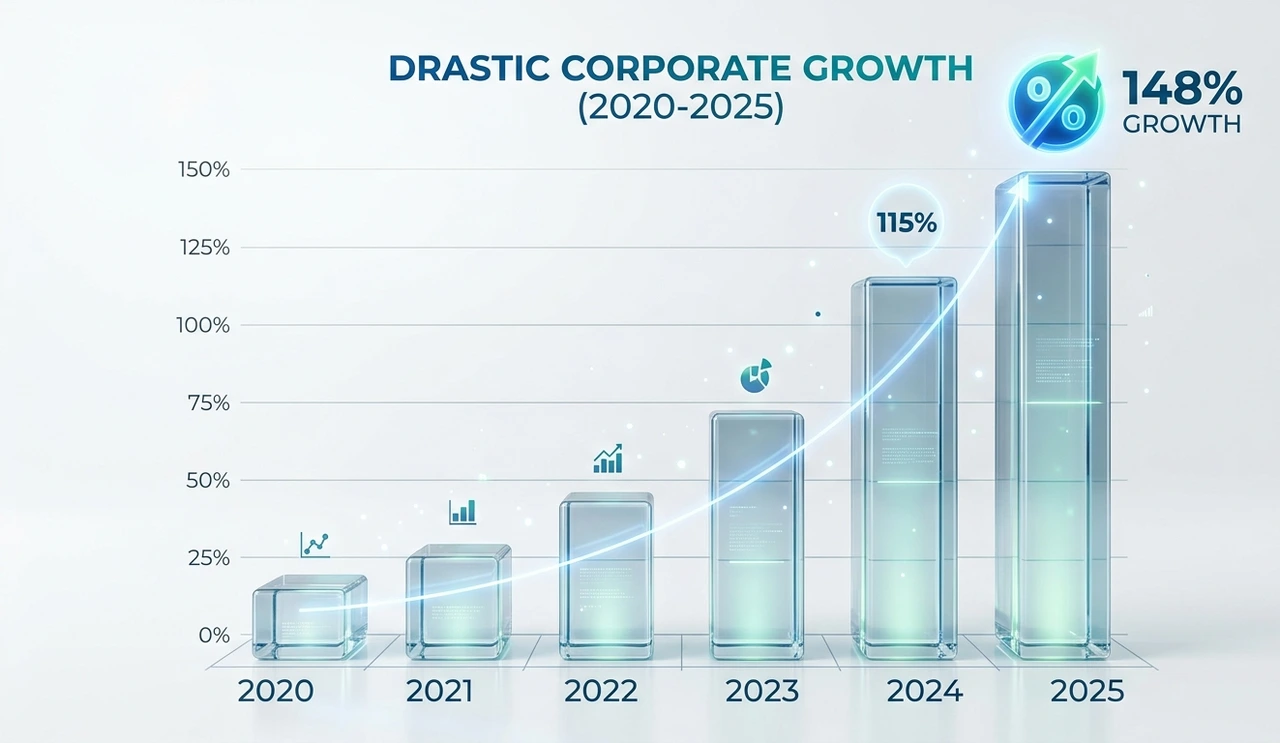
Hypothetical Case Study · Marketing Agency · 2026Meridian Digital: From 3-Day QA Cycle to Same-Day Delivery Meridian Digital manages content for 14 mid-market B2B clients. Before implementing an LLM judge rubric, their QA process looked like this: content writer delivers draft → account manager reviews → client stakeholder reviews → revisions → approval. Average cycle: 3.2 days. Client complaints about voice inconsistency: 2–3 per month. After implementing a five-dimension rubric with a Sonnet-class judge model and a human spot-check layer for anything scoring below 2.8 / 4.0: 6.4hrsAverage QA cycle (down from 3.2 days) 78%Reduction in client revision requests (months 1– 3) $4,200Monthly labor cost saved (1.4 FTE-equivalent hours) |
Judge model API costs for 1,800 evaluations/month: approximately $94 using Haiku-class for pre-filtering + Sonnet-class for flagged pieces. Net monthly ROI vs. manual QA: +$4,106.
"The rubric doesn't replace the strategist's judgment. It makes that judgment available at 1,000× the volume, without the strategist's lunch break getting in the way."
The 48-Hour Action Plan
No summary. No recaps. Here is exactly what you should do, in order, starting now.
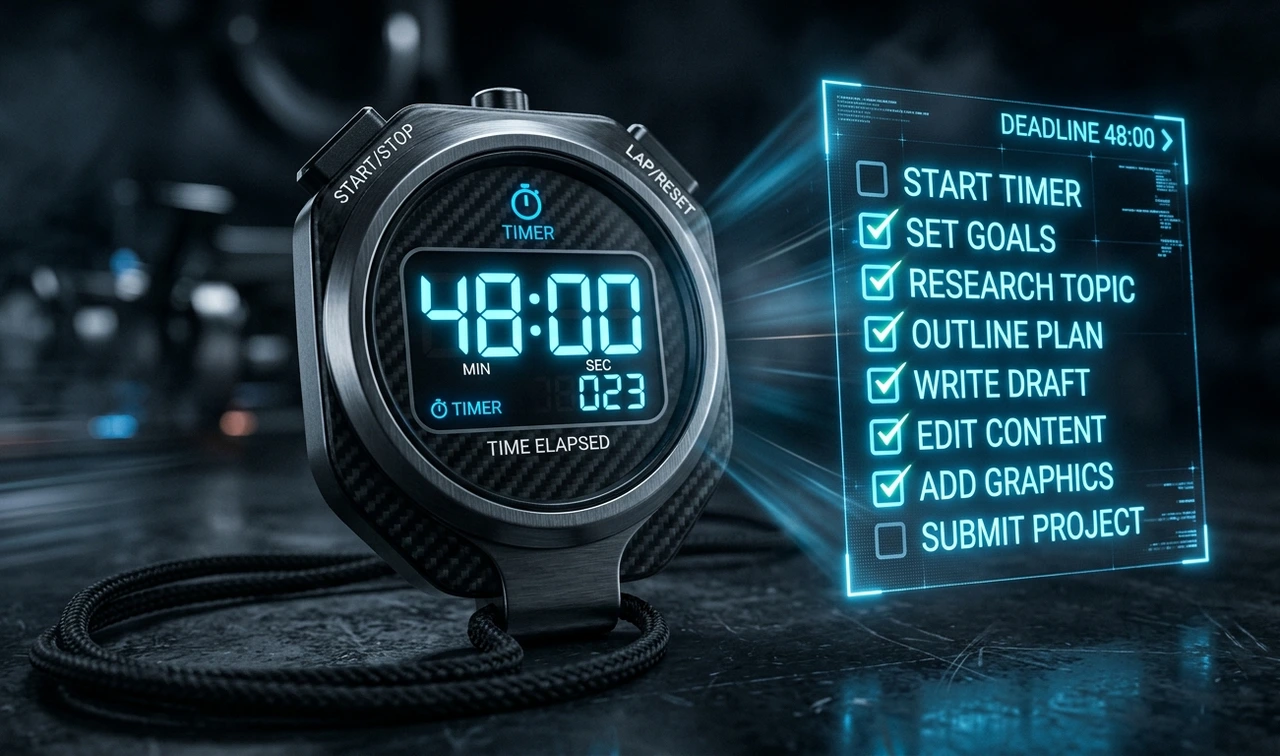
48-Hour Implementation Protocol
01 .Pull your last 30 approved content pieces per client. These become your calibration dataset and your reference library for embedding similarity. Do not skip this — you need ground truth before you build anything. 02 .Write your five dimensions with full 1–4 behavioral anchors. Block two hours. No shortcuts. Each anchor must describe a specific observable behavior in the content — not a feeling or a vague quality. Test each anchor by asking: "Could two different people read this and score the same piece identically? "03 .Have two team members score 15 of your 30 pieces using the rubric, independently." Calculate agreement. If they disagree by more than 1 point on more than 30% of scores, rewrite those anchors. Disagreement is signal, not failure. 04 .Build and run the judge prompt on the same 15 pieces. Use a different model family than your generator. Compare judge scores to human consensus. Target κ ≥ 0.65. Iterate on ambiguous anchors until you hit it. 05 .Set your pass threshold and routing logic. I recommend 2.8 / 4.0 as a baseline. Anything scoring below routes to human review. Anything above ships with a logged score. Decide this before you go live — not after your first false positive. 06 .Run the full 30-piece calibration set through the judge and log every score. Store scores with timestamps, content IDs, and client tags. This is your baseline dataset. In 30 days, you'll compare against it to measure rubric drift and model drift separately. 07 . Put the rubric in front of one real client account for 2 weeks. Track revision rates before and after. If revision requests drop by more than 40%, the rubric is working. If they don't, the problem is the rubric dimensions — not the model. 08 . Add the embedding similarity layer only after the judge is stable. Don't build everything at once. The judge rubric is the hard part. Embeddings are additive efficiency — valuable, but not the foundation. Get the judgment right first. |
Final Word The agencies that win the next two years aren't going to be the ones who generate the most AI content. They're going to be the ones who built a systematic, defensible definition of quality and baked it into their production pipeline. An LLM-as-a-Judge rubric isn't a nice-to-have. It's the infrastructure layer that separates a content operation from a content casino. |
Published on HustleToAI.com · Senior AI Solutions Architecture · All hypothetical case studies are for illustrative purposes.